

Reach thousands of whisky and spirits lovers every day.


How Should You Taste the New Macallan TIME : SPACE Sherry Cask?
 by Max RinkI’m a whisky enthusiast and aspiring writer, exploring new flavours and the stories behind every bottle.
Follow Spiritory on Google News to get our latest guides and releases delivered straight to your feed.
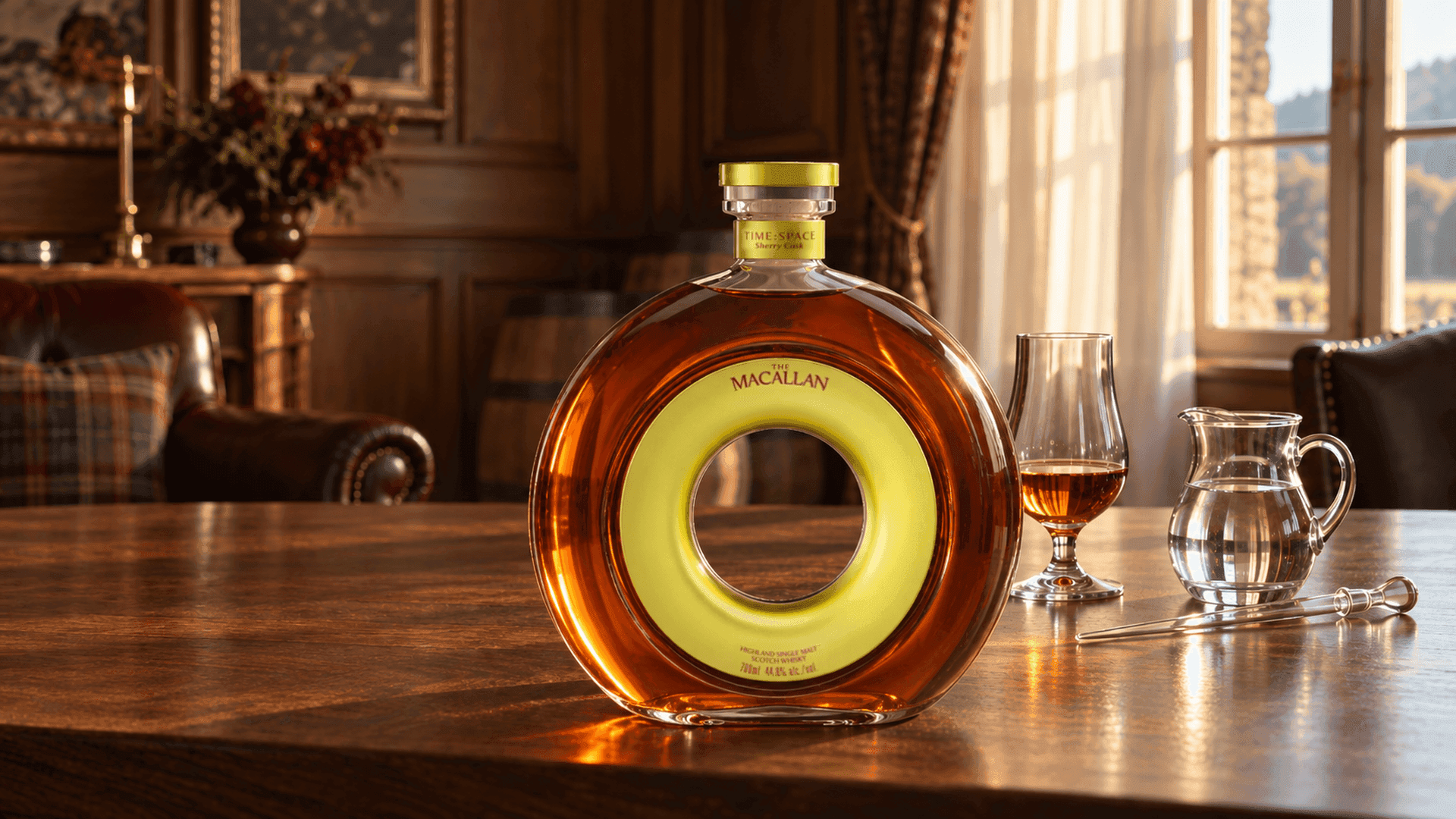
How Should You Taste the New Macallan TIME : SPACE Sherry Cask?
The best way to taste the new Macallan TIME : SPACE Sherry Cask is neat, in a tulip shaped glass, at room temperature, with only a drop of water added if the alcohol feels sharp on this 20 Years Old, 44.8% ABV single malt. Its casks are seasoned with Valdespino sherry, so the notes released at launch point to figs, dates, chocolate and warming spice, flavours that are easiest to find after the whisky has rested a few minutes in the glass.
Key Takeaways
The new release is a 20 Years Old single malt at 44.8% ABV, matured in casks seasoned with Valdespino sherry.
Launch notes reported in the drinks press describe figs, medjool dates and chocolate truffles on the nose, with espresso and gentle oak towards the finish.
A tulip shaped glass, sometimes called a copita, is the standard choice for nosing whisky, since its narrow rim concentrates aroma rather than alcohol.
Most tasting guides recommend serving whisky around 18 to 22 degrees Celsius and tasting it neat before deciding whether to add water.
Letting the whisky sit for a few minutes after pouring gives the aroma time to open up before the first nose.
Whether to open a collectable decanter like this one or keep it sealed is a personal choice, and it changes how the bottle should be stored.
Tip: Pour a small measure and taste it neat before adding anything. The Valdespino cask character is easiest to judge before any water goes in, and you can always add a drop afterwards.
What the Launch Notes Say the New Release Tastes Like
The tasting notes released with the launch of the Macallan TIME : SPACE Sherry Cask as reported by the drinks press, describe aromas of figs, medjool dates, chocolate truffles and warming spices, leading into treacle toffee, chocolate coated cherries, espresso and gentle oak. The exact wording differs slightly between outlets, so treat these notes as a guide to the style rather than a script, and not as a review written from tasting it.
That profile is a useful reference point before you pour. It tells you roughly what to expect on the nose and palate, so you can check your own impression against it rather than guessing.
Choose a Tulip Shaped Glass
A tulip shaped glass, often called a copita or a sherry glass, is the standard choice for nosing whisky, and it suits a sherry matured bottling like this one especially well. The narrow opening holds the aroma above the liquid instead of letting it spread out, and it focuses the scent toward your nose rather than emphasising the alcohol, which is what happens in a wide glass like a tumbler.
You do not need a specialist glass to taste the new release properly, but a tulip shape, whether a dedicated whisky nosing glass or a small sherry copita, will show its aroma more clearly than a rocks glass.
Serve It at Room Temperature, With or Without Water
Whisky shows its full range of aroma and flavour at room temperature, generally cited as around 18 to 22 degrees Celsius, rather than chilled or over ice, which mutes both. Taste the new release neat first, at that temperature, before deciding whether it needs anything added.
At 44.8% ABV, a little water can help. The usual approach is to add still, unflavoured water a drop at a time, tasting between each addition, rather than pouring in a measured amount. There is no fixed ratio that works for every glass or every palate, so the only reliable method is to add a small amount, taste, and stop once the whisky tastes balanced rather than hot or flat.
Let It Rest Before You Nose It
Once the whisky is poured, give it a few minutes before nosing it. Whisky guides commonly recommend waiting for the aroma to concentrate rather than nosing it the moment it hits the glass, since the scent builds as the whisky settles to room temperature and the alcohol softens slightly. This matters more for a bottle at 44.8% ABV than for a lower strength dram, since a sharper alcohol note can otherwise sit ahead of the fruit and spice. Use the wait to look at the whisky as well as smell it. Held up to the light, the dark amber colour typical of long sherry cask maturation is itself a sign of how much the wood and the sherry that seasoned it have shaped the liquid.
What the Valdespino Seasoning Adds, and Where It Sits in the Sherry Oak Range
Sherry seasoned oak works on a whisky in a few specific ways. The cask itself contributes dried fruit, spice and tannin, more so from European oak than American oak, while the sherry that has soaked into the wood during seasoning adds its own character and softens harsher notes left over from toasting. Together they are what give a sherry matured whisky its usual character of dried fruit, chocolate and warm spice, rather than the vanilla and orchard fruit more typical of a bourbon cask. In a whisky matured for as long as 20 years, that oak influence tends to show through more clearly, alongside the sherry character rather than underneath it.
The new release continues that same sherry seasoned style, but its casks were seasoned specifically with Valdespino sherry, the bodega in Jerez de la Frontera that The Macallan now part owns, rather than sherry drawn from the wider market. It sits within the same family as the distillery's Sherry Oak range, matured entirely in sherry seasoned casks like the 18 Years Old and the 25 Years Old, and its profile reads as a classic sherried Macallan rather than a new flavour direction. What changes is the provenance of the sherry, not the broad style you should expect in the glass. For the full story behind the bottle, read 7 Things to Know About the Macallan TIME : SPACE Sherry Cask and How Does the Macallan TIME : SPACE Sherry Cask Compare to Mastery?
Tip: There is no wrong choice between opening the decanter and keeping it sealed. If resale value matters most, keep the case, any paperwork and the stopper undisturbed. If you plan to drink it, decant carefully, then store the bottle upright, out of direct light, once it is open.
FAQ
What glass should I use for the new Macallan TIME : SPACE Sherry Cask?
A tulip shaped glass, such as a nosing glass or a sherry copita. Its narrow rim concentrates the aroma instead of the alcohol, which a wider glass like a tumbler tends to emphasise.
Should I add water to a whisky this strong?
Taste it neat first. If the alcohol feels sharp at 44.8% ABV, add still water a drop at a time and taste between additions, rather than pouring in a fixed amount.
What does the new release taste like?
Launch notes reported in the drinks press describe figs, medjool dates, chocolate truffles and warming spices on the nose, treacle toffee and chocolate coated cherries on the palate, and espresso and gentle oak towards the finish.
Does the Valdespino seasoning change how it compares to other Macallan Sherry Oak releases?
Not in style. It sits within the same sherry seasoned family as bottles like the 18 Years Old and the 25 Years Old, since the wood and the sherry that seasoned it are what shape that dried fruit and spice character, whichever bodega the sherry came from.
Should I open the decanter or keep it sealed?
Either is reasonable. Keeping it sealed with its original case and paperwork protects resale value, while opening it means decanting carefully and storing the bottle upright, away from light, once poured.
About the author

Max Rink
I’m a whisky enthusiast and aspiring writer, exploring new flavours and the stories behind every bottle.
To the author