

Reach thousands of whisky and spirits lovers every day.


Hibiki Japanese Harmony: The Art of Japanese Harmony in a Bottle
 by Damian BaranHooked since a Talisker 10 in 2021, I've tasted over 800 whiskies and love Islay peat and independent bottlings.
Follow Spiritory on Google News to get our latest guides and releases delivered straight to your feed.
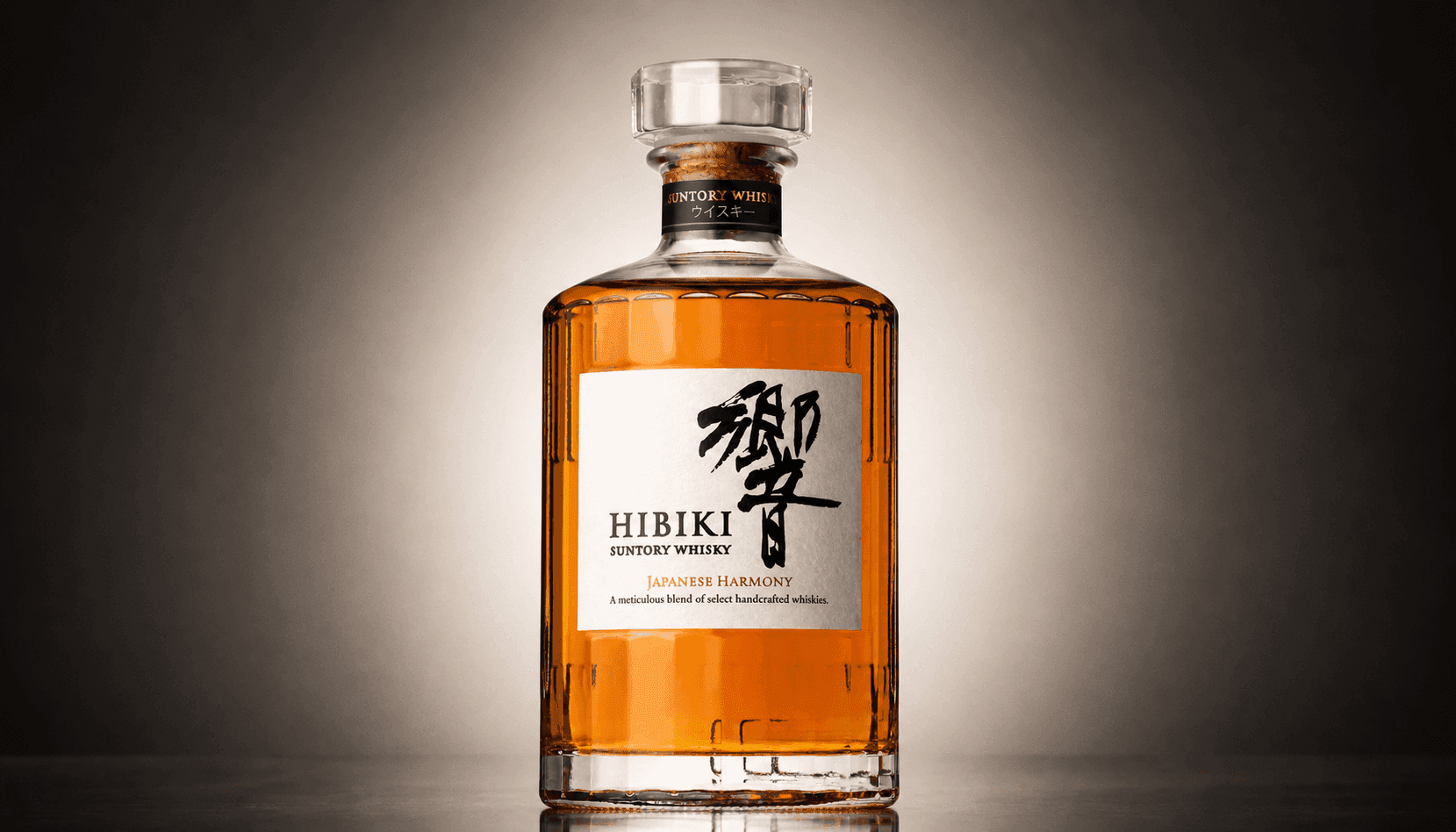
Hibiki Japanese Harmony: The Art of Japanese Harmony in a Bottle
There are whiskies we buy because of their age. Others attract us because of a distillery's history, a remarkable cask, or a limited-edition release. And then there are bottles that simply have something special about them.
They do not need to shout with high ABV, an impressive age statement, or a dramatic story.
Hibiki Japanese Harmony belongs firmly to that last category.
It is one of those bottles that perfectly demonstrates that whisky does not always have to be powerful, heavily peated, or extreme to leave a lasting impression. Here, the most important elements are balance, elegance, harmony, and the extraordinary Japanese art of blending. And that is precisely why Hibiki Japanese Harmony has earned such a special place in the world of Japanese whisky.
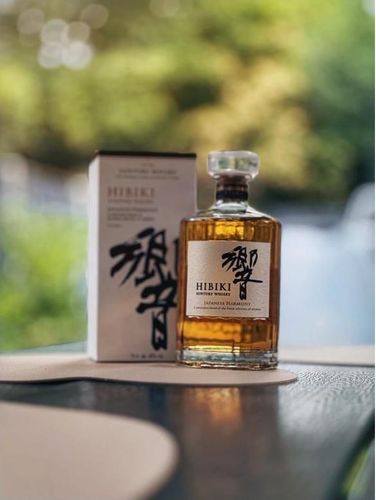
Hibiki: A Brand Built Around Harmony
The history of Hibiki began in 1989, when Suntory celebrated its 90th anniversary. The name Hibiki can be translated as “resonance” or “echo”, a remarkably fitting name for a whisky whose philosophy is based on bringing together many different characters to create one coherent expression.
The first widely recognised expression of the brand was Hibiki 17 Year Old, which eventually became one of Japan's most respected whiskies.
Japanese Harmony arrived much later, in 2015. It was created as a more accessible expression of the Hibiki philosophy and as a way for a wider audience to discover the world of Japanese whisky.
There is no age statement on the bottle.
For some collectors, that may initially seem like a disadvantage. For me, however, it is a reminder that with Hibiki, the most important thing is not the number printed on the label, but what is inside the bottle.
Three Distilleries, One Character
One of the most fascinating aspects of Hibiki Japanese Harmony is that its character is built from whiskies originating from three important Suntory sites.
The first is Yamazaki, Japan's oldest malt whisky distillery. Its whiskies contribute some of the richer, fruitier and more complex malt characteristics to the blend.
Then there is Hakushu, located in the mountains of Yamanashi Prefecture. Hakushu is often associated with freshness, green notes, herbs and a particularly vibrant style of whisky.
The third component is Chita, Suntory's grain whisky distillery.
And this is where the real art of blending begins.
Each of these components has its own personality. Each brings something different to the final whisky. The blender's challenge is to ensure that when they are combined, they do not create a confusing collection of flavours, but instead become one coherent whisky in which the individual elements complement each other.
It is rather like an orchestra.
A brilliant violinist can create beautiful music alone, but it is the combination of many instruments that creates a complete composition.
With Hibiki, that concept of harmony is at the very heart of the whisky.
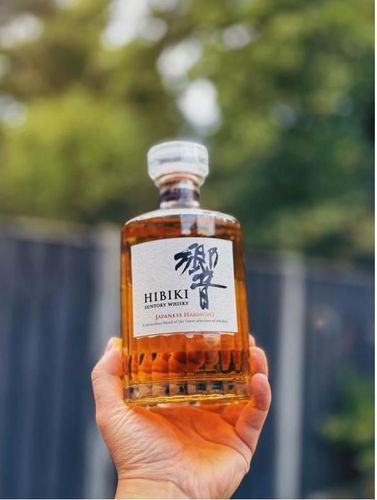
A Bottle That Is Part of the Story
Before we even pour the whisky into a glass, it is worth taking a moment to appreciate the bottle itself.
Hibiki is one of those whiskies that can be recognised almost instantly.
The distinctive bottle features 24 facets, representing the 24 traditional seasonal divisions of the Japanese calendar. It is a small detail, but one that perfectly illustrates Suntory's approach to the entire project.
Nothing here feels accidental.
The label uses traditional Japanese paper, while the centrepiece is the beautiful kanji character 響.
Then there is the distinctive stopper and minimalist, elegant presentation.
Hibiki does not try to look like an Islay whisky. There is no heavy industrial aesthetic, no fire, smoke or darkness.
Instead, it represents Japanese elegance.
And that is precisely why it is such an attractive bottle to have on a collector's shelf.
What Is Inside the Bottle?
Japanese Harmony is a whisky with a profile that is considerably more subtle than many classic Scottish single malts.
There is no powerful peat smoke, no aggressive oak influence and no overwhelming alcohol sensation.
The first impression is much more refined.
Nose
The first aromas bring flowers, honey and fruit.
There are notes of orange, mandarin, apricot and delicate vanilla. With time, more spice appears, together with a subtle influence of oak.
There is something distinctly Japanese about this combination: freshness combined with gentle sweetness.
This is a whisky that rewards patience.
You do not need to rush it.
Give it a little time in the glass and let the aromas develop.
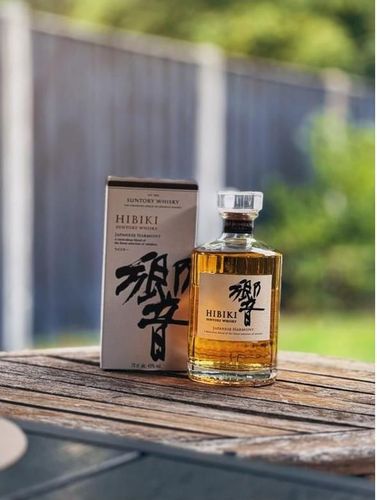
The Palate: Where the Harmony Begins
On the palate, Hibiki Japanese Harmony is soft, elegant and remarkably well balanced.
The first impressions are honey, orange and ripe fruit.
Then come vanilla, gentle spices and a touch of oak sweetness.
There is also a subtle oriental character that can remind you of mizunara wood.
And mizunara is one of the most fascinating elements of Japanese whisky.
Suntory uses whiskies matured in several different types of casks, including casks made from this distinctive Japanese oak. Mizunara is notoriously difficult to work with. The wood is porous and presents significant challenges when used for barrel production.
In return, however, it can contribute wonderfully distinctive notes of spice, sandalwood, coconut and incense.
In Hibiki, this influence is not aggressive.
It is more like a carefully chosen accent in a fine perfume.
It does not dominate.
It completes the composition.
The Finish
The finish is medium in length and considerably more elegant than powerful.
The sweetness and fruit remain first, followed by gentle spice and delicate oak.
It is not a whisky that tries to fight for your attention for minutes after the final sip.
And perhaps that is one of its greatest strengths.
Hibiki Japanese Harmony does not need to prove anything.
It simply leaves behind a pleasant, balanced and harmonious impression.
A Collector’s Whisky or a Whisky to Drink?
This is a question that often comes up with Japanese whisky.
In the case of Hibiki, my answer would be:
Both.
Japanese Harmony is obviously not a collector’s bottle in the same league as Hibiki 21 or Hibiki 30. Nor does it carry the same prestige as some of the older discontinued expressions.
But it is nevertheless one of the most recognisable contemporary Japanese whiskies.
For a collector, it also represents an important chapter in the extraordinary rise of Japanese whisky around the world.
Because not so long ago, Japanese whisky was still something of an exotic curiosity for many European whisky enthusiasts.
Today, names such as Yamazaki, Hakushu and Hibiki are recognised by virtually every serious whisky lover.
That transformation is part of what makes these bottles so interesting.
My Take
For me, Hibiki Japanese Harmony is above all an elegant whisky.
I would not reach for it when I am looking for a powerful dram on a cold winter evening. When I want smoke, peat and character, I will probably turn to Lagavulin, Laphroaig or Ardbeg.
But when I want something softer, refined and beautifully composed, Hibiki is an excellent choice.
It is also a fantastic whisky to introduce to someone who is just beginning their whisky journey.
It is not aggressive. It does not demand years of tasting experience. You can enjoy it neat, with a few drops of water, or even in the classic Japanese style with soda water as a Hibiki Highball.
That versatility is another one of its strengths.
Final Thoughts
Looking at Hibiki Japanese Harmony, it is easy to focus on the beautiful bottle.
And yes, it is difficult not to admire it.
But the real story begins when you pour the whisky into the glass.
This is a whisky created not to impress through sheer power, but to demonstrate the art of Japanese blending: the ability to combine different distillates, casks, aromas and personalities into one beautifully coherent composition.
Yamazaki, Hakushu and Chita.
Malt and grain.
Different casks.
Different personalities.
One harmony.
And perhaps that is exactly why Hibiki deserves a place in a whisky collection.
It is not the oldest, strongest or most expensive bottle on the shelf.
But when I look at that distinctive 24-faceted bottle, I see more than just whisky.
I see one of the symbols of Japan’s remarkable journey to becoming one of the world’s most respected whisky-producing nations.
Hibiki Japanese Harmony is not a whisky that shouts.
It is a whisky that whispers.
And sometimes, those are the whiskies we most want to listen to.
Tasting Notes
Nose: Honey, orange, mandarin, flowers, vanilla, ripe fruit
Palate: Honey, candied orange, apricot, vanilla, gentle spice, oak
Finish: Soft, fruity, lightly spicy, delicate wood
ABV: 43%
Age Statement: NAS
Style: Japanese Blended Whisky
My Rating: 84/100
About the author

Damian Baran
Hooked since a Talisker 10 in 2021, I've tasted over 800 whiskies and love Islay peat and independent bottlings.
To the author