

Reach thousands of whisky and spirits lovers every day.


Hibiki 30: Thirty Years of Harmony. The Art of Japanese Whisky at Its Finest
 by Damian BaranHooked since a Talisker 10 in 2021, I've tasted over 800 whiskies and love Islay peat and independent bottlings.
Follow Spiritory on Google News to get our latest guides and releases delivered straight to your feed.
Hibiki 30: Thirty Years of Harmony. The Art of Japanese Whisky at Its Finest
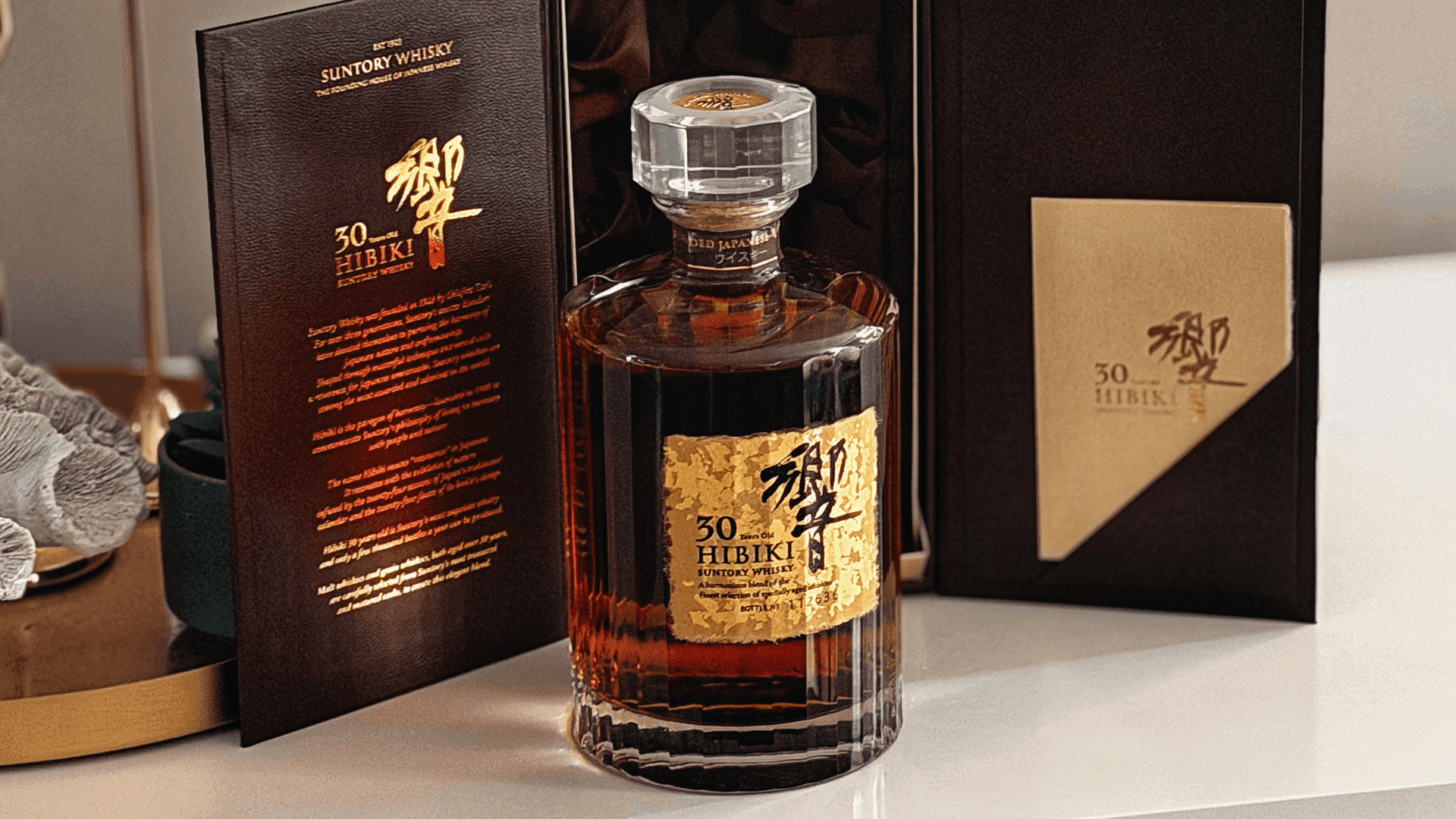
Hibiki 30 Years Old is a Japanese blended whisky from Suntory, whose Hibiki range launched in 1989 and takes its name from the Japanese word for resonance. Its bottle has twenty-four facets, inspired by the twenty-four seasons of the traditional Japanese calendar, and its label is made from Echizen washi paper.
There are whiskies we drink, whiskies we collect, and then there are whiskies that remind us why we fell in love with this world in the first place.
Hibiki 30 belongs firmly in the last category.
Some bottles impress with their age, others with the reputation of the distillery behind them, and a select few with their rarity and almost mythical status among collectors. Hibiki 30 manages to bring all these elements together, but its greatest achievement is something much harder to measure: harmony.
In a world where whisky is increasingly discussed through numbers, auction prices, limited editions and investment potential, Hibiki 30 offers a different perspective. It reminds us that the real art of whisky-making is not necessarily about creating the loudest, strongest or most heavily sherried expression. Sometimes, the greatest achievement is making dozens of individual components work together so naturally that the final result feels like a single, perfectly composed piece of music.
And perhaps that is exactly what Hibiki was always meant to represent.
The meaning behind the name
The word Hibiki translates from Japanese as resonance. It is a beautiful name for a whisky whose identity is built around the relationship between different flavours, aromas and maturation styles.
Introduced by Suntory in 1989, Hibiki was created to represent the Japanese approach to blended whisky. Rather than focusing on a single distillery or a particular style of malt, the philosophy was to bring together different expressions and allow their individual personalities to create something greater than the sum of their parts.
Hibiki 30 represents one of the most mature and prestigious interpretations of this philosophy.
At its heart is a carefully constructed blend of Japanese malt and grain whiskies. The malt components come from Suntory's Yamazaki and Hakushu distilleries, while grain whisky from Chita provides another important dimension to the composition.
Each distillery contributes something different.
Yamazaki brings depth, richness and the possibility of beautifully developed fruity and woody characteristics. Hakushu is associated with a fresher, more delicate and sometimes gently herbal character. Chita grain whisky provides softness, sweetness and structure, helping to connect the different elements.
However, the secret of Hibiki 30 is not simply the selection of outstanding individual whiskies. It is the ability to combine them in proportions that create balance, complexity and remarkable consistency.
This is where the experience of the blender becomes essential.
Thirty years of patience
Thirty years is a long time in the whisky world.
A spirit placed into a cask today will spend decades slowly changing, interacting with the wood and responding to its surroundings. During this period, the character of the original distillate gradually evolves. Fresh fruity notes can become deeper and more concentrated, sweetness develops additional layers, and oak introduces spices, tannins and mature woody characteristics.
But ageing is never a guarantee of greatness.
A whisky can spend thirty years in a cask and emerge tired, overly woody or unbalanced. The challenge is to identify the right casks, monitor their development and understand when their contents have reached the desired character.
With Hibiki 30, the objective is not simply to demonstrate what three decades of maturation can achieve. It is to use mature whiskies as building blocks for a carefully designed composition.
The result is a blend that aims to preserve elegance while introducing the depth and complexity associated with long maturation.
There is also something particularly fascinating about the time involved. The whiskies contributing to a bottle of Hibiki 30 began their maturation many years before the bottle reached the hands of its eventual owner. They belong to a different period in Japanese whisky history, carrying with them the influence of distillery production, cask selection and decisions made decades earlier.
When we open such a bottle, we are experiencing the result of decisions that began long before we knew it existed.
That is one of the reasons why mature Japanese whisky has such a special place among collectors.
A bottle that tells its own story
Before even considering what is inside, Hibiki 30 deserves attention for its presentation.
The iconic Hibiki bottle is one of the most recognisable designs in the world of Japanese whisky.
Its distinctive shape, with twenty-four carefully defined facets, is inspired by the traditional Japanese calendar and its twenty-four seasonal divisions.
This is not merely a decorative detail.
The design reflects the Japanese appreciation of nature, the changing seasons and the passage of time. Each season has its own character, atmosphere and beauty. In a similar way, whisky evolves through different stages of maturation, with every year contributing something to its final identity.
The label is traditionally made from Echizen washi, a type of Japanese handmade paper with a long history. The calligraphy adds another layer of authenticity and connects the presentation with traditional Japanese craftsmanship.
The overall impression is one of understated luxury.
There is no need for excessive decoration or extravagant visual effects. Hibiki 30 communicates its status through proportions, materials and attention to detail.
For collectors, this matters.
A truly special whisky should be memorable not only because of its liquid but also because of the experience surrounding it. Hibiki 30 understands this perfectly.
Inside the glass: a mature Japanese composition
A whisky of this age and reputation deserves time.
It is not something I would rush through or approach as an ordinary evening dram. I would begin with a small pour in a tulip-shaped glass, allowing it to rest for several minutes before the first serious examination.
Nose
The first impression is one of mature elegance.
Rich dried fruits, dark honey and polished oak form the foundation. There is an inviting sweetness reminiscent of raisins, dates and ripe plums, accompanied by orange peel and delicate citrus oils.
As the whisky opens, additional layers begin to emerge. Vanilla, soft spices, sandalwood and old polished furniture create a warm and sophisticated atmosphere. There is also a delicate floral quality that prevents the heavier elements from dominating.
What makes the nose particularly interesting is the relationship between sweetness and wood.
Neither seems to be fighting for attention. Instead, they complement each other, creating an impression of depth without unnecessary heaviness.
Palate
The first sip reveals a remarkably layered character.
The texture is smooth and rounded, with honey, dried apricots, dark fruits and gentle caramel forming the initial impression. There is a beautiful combination of sweetness and mature oak, supported by cinnamon, nutmeg and subtle notes of dark chocolate.
The fruit character gradually develops towards orange marmalade, raisins and perhaps a little black cherry.
Behind the sweetness, the influence of long maturation becomes increasingly apparent. Polished wood, delicate spices and a restrained dryness provide structure and prevent the whisky from becoming overly sweet.
There is a sense of precision here.
Every element appears to have its place, and the different components work together rather than competing for attention.
Finish
The finish is long, warming and elegant.
Dark chocolate, dried fruit, oak spices and gentle sweetness remain on the palate. There is a pleasant woody dryness towards the end, accompanied by lingering notes of honey and citrus.
It is not necessarily the most aggressive or powerful finish imaginable. Instead, its appeal lies in the gradual disappearance of flavours and the way individual notes continue to reveal themselves.
Hibiki 30 is a whisky that encourages contemplation.
Japanese whisky and the philosophy of balance
One of the most interesting aspects of Hibiki 30 is what it represents within the wider whisky industry.
Scotch whisky has traditionally offered a tremendous diversity of styles, from heavily peated Islay malts to rich Speyside sherry expressions, powerful Campbeltown whiskies and elegant Highland single malts.
Japanese whisky developed its own identity, with considerable emphasis on precision, consistency and blending.
This does not mean that Japanese whisky lacks individuality. Quite the opposite. The ability to create different styles and then combine them into a coherent final product is one of the country's great strengths.
Suntory has spent decades developing this philosophy.
Hibiki is perhaps its most recognisable expression, demonstrating that blending should never be considered an inferior form of whisky-making.
Sometimes, creating an exceptional blend requires even more imagination and technical understanding than producing an outstanding single malt.
The blender must understand not only the individual character of every component but also how those components will interact with one another.
With Hibiki 30, this becomes particularly impressive. Working with mature whiskies means dealing with flavours that have already undergone decades of transformation. The challenge is to preserve their individuality while creating a harmonious final result.
It is an art that requires both experience and restraint.
A collector's perspective: beyond the age statement
There is no denying that Hibiki 30 occupies a special position in the premium whisky market.
Its age, reputation, limited availability and connection with one of Japan's most important whisky producers make it highly desirable among collectors around the world.
However, I believe it is important to look beyond the price tag.
The growing popularity of Japanese whisky has transformed the market considerably. Certain bottles have become symbols of luxury, and their prices increasingly reflect their reputation and scarcity rather than simply their drinking qualities.
Hibiki 30 sits within this fascinating world.
For some collectors, it represents a trophy bottle, something that completes an important part of a Japanese whisky collection. For others, it is an opportunity to experience a level of blending that is rarely encountered in everyday whisky drinking.
Personally, I find the second perspective particularly interesting.
A bottle should never become so valuable that we forget why we wanted it in the first place.
Whisky is ultimately made to be experienced, smelled, tasted and remembered.
Of course, opening a bottle of Hibiki 30 is not an everyday decision. Its rarity and value make every pour feel significant. But that is also part of the experience.
There are bottles we buy because we want to own a piece of whisky history. And there are bottles we eventually open because we want to understand why they became part of that history.
Hibiki 30 belongs to both categories.
Thirty years, one philosophy
What makes Hibiki 30 so fascinating is not simply the number printed on the bottle.
It is the philosophy behind it.
Three decades of maturation, different distilleries, different production styles, carefully selected casks and the experience of the people responsible for bringing everything together.
All these elements eventually meet in one bottle.
In an industry where age statements and limited releases often dominate conversations, Hibiki 30 offers a reminder that great whisky is about much more than a number.
It is about patience, craftsmanship and the ability to recognise beauty in balance.
Perhaps the most appropriate way to describe Hibiki 30 is not as a whisky that tries to impress you with every sip, but as one that gradually earns your appreciation.
And that is a very different kind of luxury.
Thirty years of maturation. Decades of experience. One expression of harmony.
Some whiskies tell you how old they are.
Hibiki 30 tells you what time can become when it meets craftsmanship.
About the author

Damian Baran
Hooked since a Talisker 10 in 2021, I've tasted over 800 whiskies and love Islay peat and independent bottlings.
To the author