

Reach thousands of whisky and spirits lovers every day.


Ardbeg Very Old 30 Years Old – A Legend of Islay Captured in a Bottle
 by Damian BaranHooked since a Talisker 10 in 2021, I've tasted over 800 whiskies and love Islay peat and independent bottlings.
Follow Spiritory on Google News to get our latest guides and releases delivered straight to your feed.
Ardbeg Very Old 30 Years Old – A Legend of Islay Captured in a Bottle
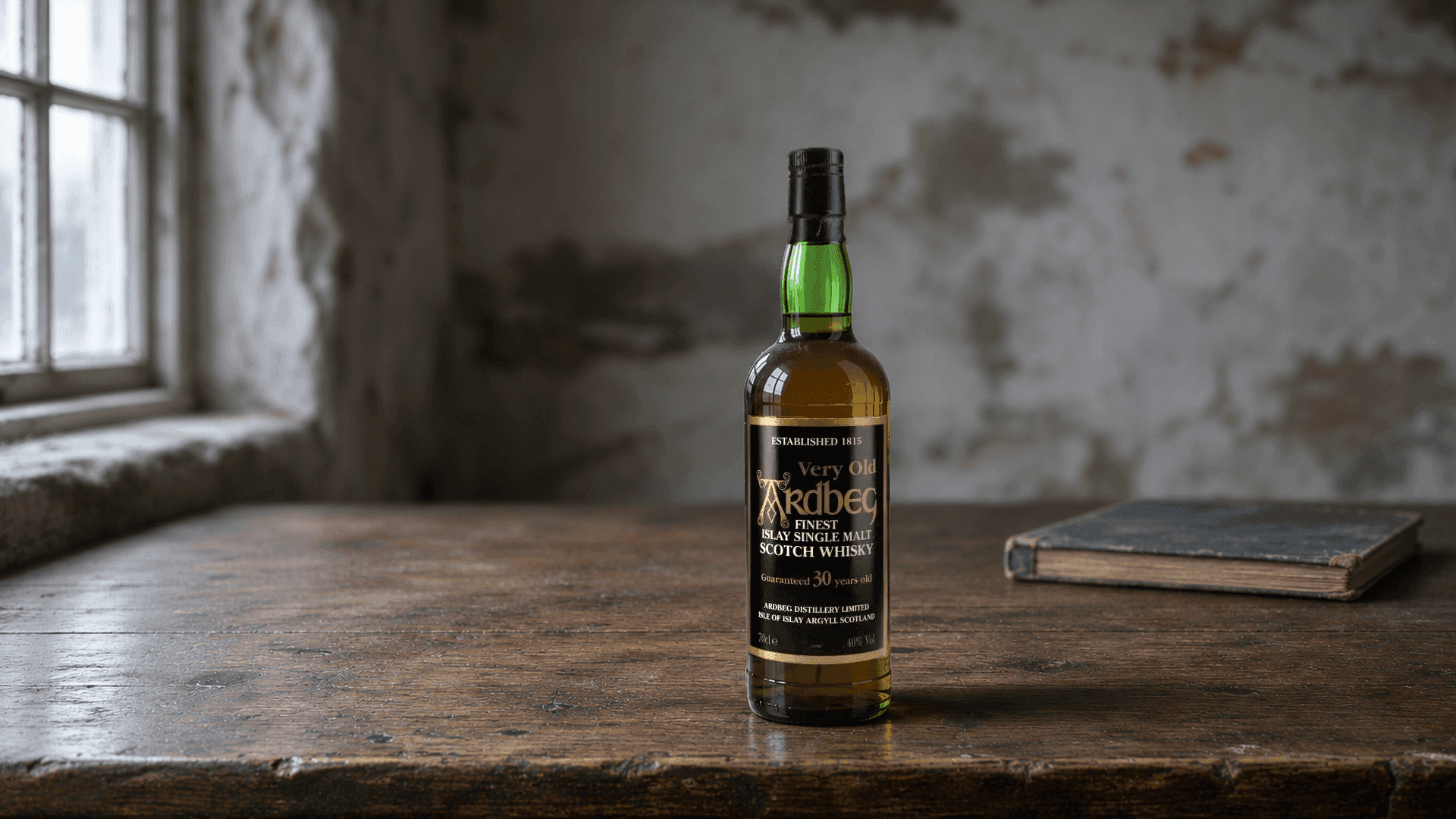
Ardbeg Very Old 30 Years Old is an Islay single malt bottled at 40% ABV, with the words "Guaranteed 30 years old" on its black and gold label. Collectors identify it as a distillery bottling from the 1990s, a period when Ardbeg's future was uncertain, before The Glenmorangie Company acquired the distillery in 1997.
Some whiskies are bought for their flavour, others are collected for their rarity, and then there are bottles that combine both qualities with an extraordinary story. Ardbeg Very Old 30 Years Old belongs to this final category. It is an exceptional offering for lovers of peated single malts, as well as a testament to the turbulent history of one of the most recognisable distilleries on the Scottish island of Islay.
The black label with gold detailing, the distinctive green bottle and the statement “Guaranteed 30 years old” immediately catch the eye. This is not a modern release designed to capitalise on the premium whisky trend, but rather a bottling associated with a period when Ardbeg's future remained uncertain. It is precisely this historical perspective that makes the bottle interesting not only to those seeking mature spirits, but also to collectors.
Ardbeg – The Story of a Distillery That Refused to Disappear
Ardbeg Distillery is located on Islay, an island off the west coast of Scotland. The region is renowned for its distinctive whiskies, in which peat smoke, maritime influences and intense aromas form an essential part of the spirit's identity.
The official history of Ardbeg dates back to 1815, when John Macdougall obtained a licence allowing him to operate the distillery legally. Over the following decades, the distillery developed, changed hands several times and established a reputation as a producer of whisky with a bold and distinctive character. However, the twentieth century brought considerable challenges to the industry, and Ardbeg was not immune to them.
The 1980s and 1990s proved particularly difficult. Production was suspended in 1981, and its subsequent resumption did not immediately bring full stability. During this period, the Scotch whisky industry faced changing demand, corporate consolidation and the closure of unprofitable distilleries.
A turning point came in 1997, when the distillery was acquired by The Glenmorangie Company. Ardbeg began a new chapter in its history and gradually regained its position as a producer highly regarded by whisky enthusiasts around the world.
In this context, Ardbeg Very Old 30 Years Old is more than just a thirty-year-old whisky. It is also a bottle that serves as a reminder of an era when the distillery's fate was far from certain.
Ardbeg Very Old 30 Years Old – What Do We Know About This Release?
The label on the bottle featured here contains several important details: “Established 1815”, “Very Old”, “Finest Islay Single Malt Scotch Whisky” and “Guaranteed 30 years old”. It also displays the 70 cl volume marking and an alcohol strength of 40%.
These are characteristic features of an older Ardbeg Very Old bottling, identified on the collectors' market as a release dating from the 1990s. Whisky.Auction has described a similar bottle as an official distillery bottling from that period.
The age statement means that the youngest component of the whisky matured in an oak cask for at least 30 years. However, this does not mean that the spirit spent three decades in one specific cask, nor does whisky continue to age once it has been bottled. Whisky matures in the cask, not in the sealed bottle.
It is also worth emphasising that the appearance of the label alone is insufficient to establish the exact bottling year of an individual bottle. Additional information would be required, such as photographs of the back label, closure, glass markings and provenance documentation.
What Character Can We Expect from a 30-Year-Old Ardbeg?
Ardbeg is renowned for its peaty, smoky style, often associated with citrus notes, earthy characteristics and a distinctive mouthfeel. The producer highlights the characteristic balance between the intensity of peat and sweeter elements.
When discussing Ardbeg Very Old 30 Years Old, however, it is worth being cautious about attributing specific tasting notes unless this particular bottle has actually been tasted. Maturity does not automatically guarantee a particular flavour profile. Factors such as the type of casks used, maturation conditions and storage after bottling all play an important role.
Based on the distillery's characteristic style, one might expect interesting interactions between smoke, peat, oak and more mature sweet notes on the nose. After thirty years in the cask, the intensity of the peat may develop differently from that found in younger Ardbeg expressions. Extended contact with oak can introduce hints of vanilla, spices, dried fruit or leather, but their presence and intensity should be regarded as tasting hypotheses rather than confirmed notes for this particular release.
At 40% ABV, the whisky has a relatively moderate strength compared with many contemporary collectible whiskies, which are often bottled at higher alcohol levels. Nevertheless, this does not diminish the bottle's historical significance. Its value lies primarily in the age statement, provenance and place in the brand's history.
The Bottle – Classic Design Without Unnecessary Embellishment
The bottle featured here has the characteristic green glass, a dark closure and a black label with gold accents. The design is relatively understated yet highly distinctive. The prominent “Ardbeg” lettering, the thirty-year age statement and the reference to Islay create a composition that fits perfectly with the aesthetic of older Scotch whisky bottlings.
In the world of collecting, such details matter. An older label, original closure and preserved markings can help identify a particular release. At the same time, visual condition is only one part of the overall assessment. The fill level, any signs of leakage, the condition of the closure and the presence of the original packaging are equally important.
The bottle looks interesting in the photograph, but a complete assessment would require examining it from every angle. When dealing with a whisky that is several decades old, authenticity and storage conditions should never be overlooked.
Collectible Value and Auction Prices
Ardbeg Very Old 30 Years Old regularly appears on the collectors' market, and auction results demonstrate that it is a bottle of genuine market significance.
For example, Whisky.Auction recorded the sale of a similar bottling for £725 in April 2026. Meanwhile, European Whisky Auctions reported a hammer price of €1,200 for an Ardbeg 30 Years Old in July 2025. Another example achieved £1,150 at an auction that ended in March 2024.
Such variations are perfectly natural. The price of an individual bottle depends on its condition, whisky fill level, completeness of the packaging, reliability of its provenance and the level of interest among auction participants. Historical results do not guarantee that a similar amount will be achieved in the future.
It is worth remembering that an auction hammer price is not the same as a retail price or the amount received by the seller after commissions have been deducted. Therefore, before selling, it is advisable to compare several recent results relating to precisely the same bottle version.
To Drink or to Keep in the Collection?
This is a question faced by many owners of older whiskies. In the case of Ardbeg Very Old 30 Years Old, the answer depends on the reason for owning the bottle.
If tasting and experiencing a historical expression of the distillery's style are the main priorities, opening it could be an extraordinary experience. A thirty-year-old Ardbeg bottling offers an opportunity to explore the brand from a perspective quite different from that of contemporary expressions available in shops today.
However, if the bottle is intended to remain part of a collection, it is worth ensuring a stable temperature, protection from direct sunlight and safe storage in an upright position. Prolonged contact between high-strength alcohol and the cork can accelerate its deterioration. Sudden temperature fluctuations should also be avoided, and the bottle should be checked periodically for any signs of leakage.
Conclusion – A Piece of Islay History
Ardbeg Very Old 30 Years Old is a whisky that brings together three elements particularly valued by collectors: an impressive stated maturation age, the distinctive Islay style and the historical context of the brand. Its significance extends beyond the contents of the bottle itself, as it recalls a period of uncertainty that the distillery endured before its revival in the late 1990s.
This is not a release that should be judged solely by its age or price. Its true appeal lies in the combination of history, craftsmanship and heritage associated with one of Scotland's most recognisable distilleries.
For an Ardbeg enthusiast, it represents a fascinating chapter in the brand's history. For a collector, it is a bottle whose condition and provenance deserve particular attention. And for anyone interested in Scotch whisky, it is an excellent example of how the contents of a glass bottle can tell a story far longer than the maturation process itself.
- Ardbeg – The Story of a Distillery That Refused to Disappear
- Ardbeg Very Old 30 Years Old – What Do We Know About This Release?
- What Character Can We Expect from a 30-Year-Old Ardbeg?
- The Bottle – Classic Design Without Unnecessary Embellishment
- Collectible Value and Auction Prices
- To Drink or to Keep in the Collection?
- Conclusion – A Piece of Islay History
About the author

Damian Baran
Hooked since a Talisker 10 in 2021, I've tasted over 800 whiskies and love Islay peat and independent bottlings.
To the author