

Reach thousands of whisky and spirits lovers every day.


Ardbeg 1967 Signatory Vintage - A Testament to a Lost Era
 by Damian BaranHooked since a Talisker 10 in 2021, I've tasted over 800 whiskies and love Islay peat and independent bottlings.
Follow Spiritory on Google News to get our latest guides and releases delivered straight to your feed.
Ardbeg 1967 Signatory Vintage - A Testament to a Lost Era
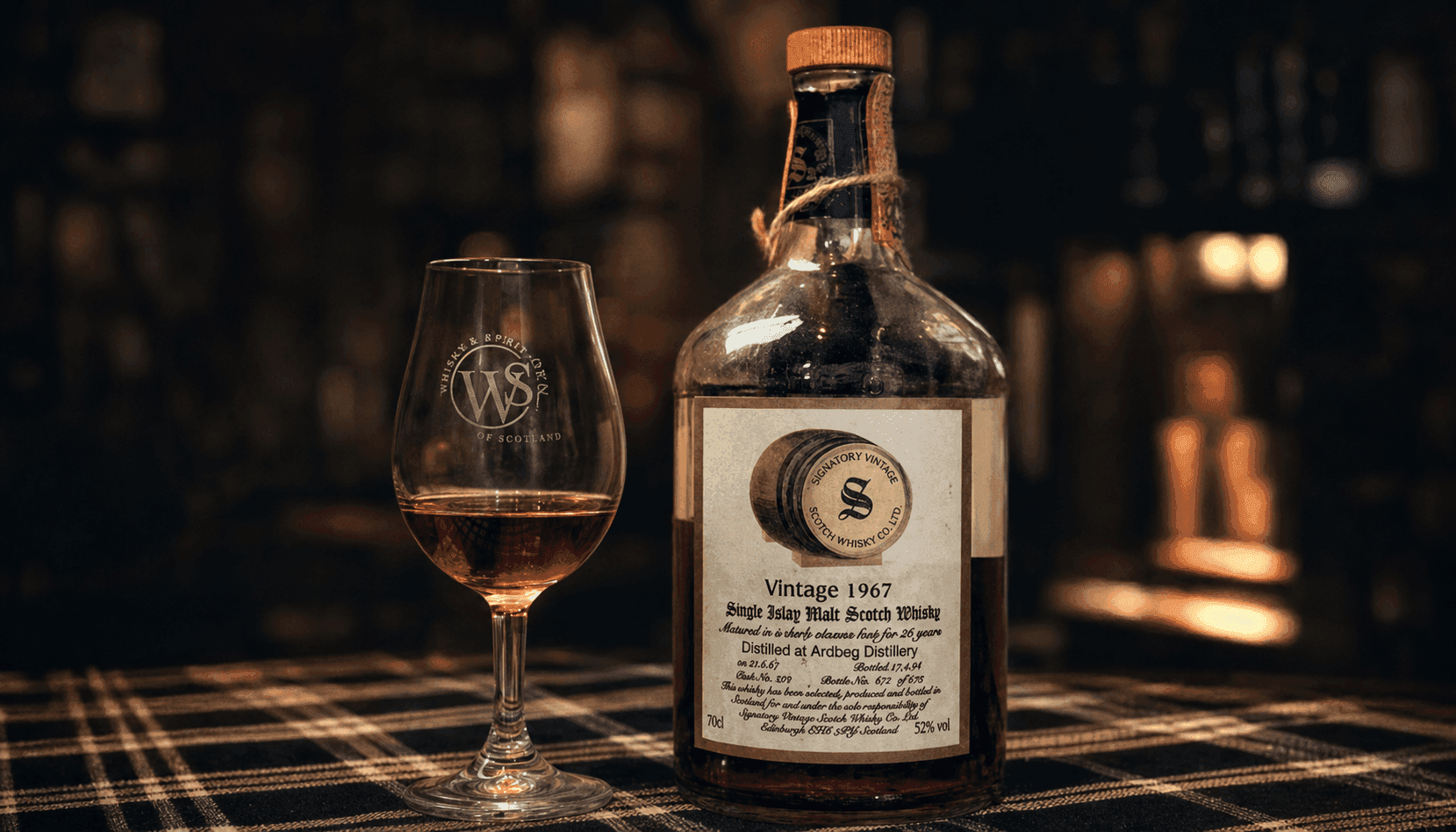
Some whisky bottles impress because of what’s inside. Others tell the story of an entire era. The Ardbeg 1967 Signatory Vintage 30 Years Old belongs firmly in the latter category.
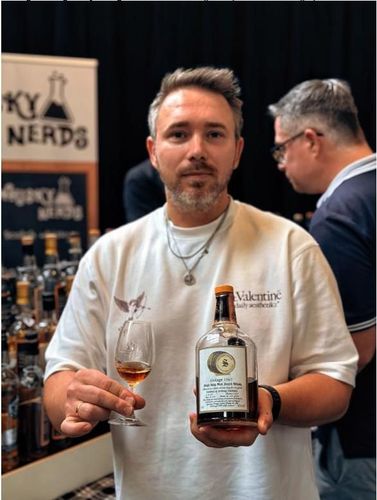
This is far more than a thirty-year-old Islay single malt. It is a time capsule, preserving a style of whisky production, raw materials, and craftsmanship that no longer exists. Every sip offers a
glimpse into a Scotland that has long since disappeared, making this bottle not only a remarkable whisky but also a piece of liquid history.
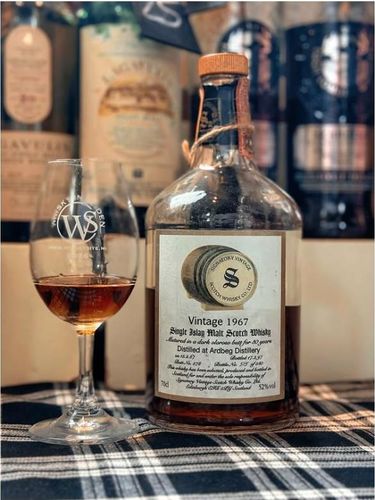
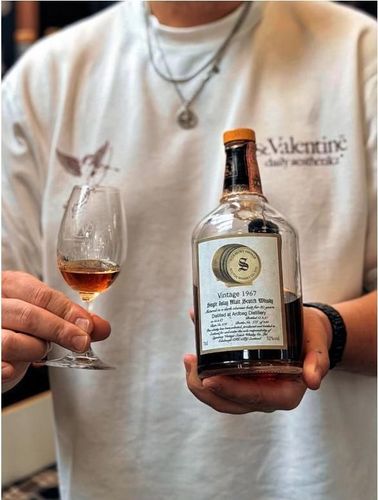
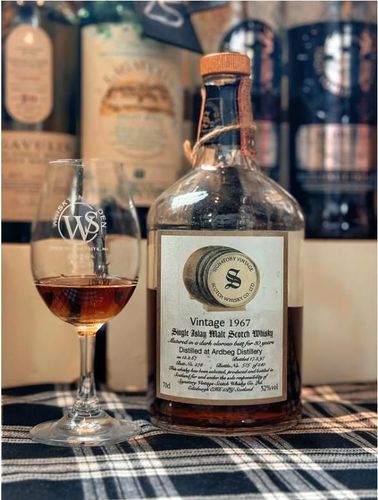
Looking at its humble, iconic 'dumpy' bottle, it is hard to imagine that its journey began over half a century ago. Distilled on 15 February 1967, the spirit was filled into Sherry Butt No. 578, where it patiently matured for three decades before being bottled by Signatory Vintage on 17 February 1997 at its natural cask strength of 52% ABV. Only 540 bottles were produced, making it one of the rarest independent Ardbeg releases ever bottled.
1967 – A Different World
When this whisky was distilled, humanity had not yet landed on the Moon. The Beatles were recording Sgt. Pepper’s Lonely Hearts Club Band, and Scotland’s whisky industry was enjoying one of the greatest periods of expansion in its history.
Demand for Scotch whisky was booming, driven largely by the global success of blended whisky. Distilleries were producing spirit to satisfy immediate demand, not future collectors. Few could
have imagined that whisky distilled in the late 1960s would one day become some of the most desirable bottles on the planet.
Ironically, that very lack of expectation allowed distillers to focus solely on quality.
Ardbeg Before Modernisation
Today's Ardbeg is an internationally celebrated brand, but the Ardbeg of the 1960s was a very different distillery.
Production methods were slower, more traditional, and considerably less automated. Long fermentations, heavily peated malt, and careful distillation produced a spirit renowned for its extraordinary weight and complexity.
The Ardbeg of this era possessed an unmistakable personality: intensely smoky, deeply oily, waxy, mineral, medicinal, and unmistakably maritime. Layers of sea spray, tar, iodine, wood smoke, citrus oils and earthy peat combined to create a whisky unlike anything else produced in Scotland.
Many whisky historians believe that spirits distilled before the technological and operational changes of the 1970s represent the purest expression of Ardbeg’s original character. It is no coincidence that bottles distilled between 1965 and 1970 are now among the most sought-after whiskies in the world.
The Difficult Years
Although Ardbeg is now one of Scotland's most prestigious distilleries, its survival was far from guaranteed.
The whisky boom eventually collapsed during the late 1970s and early 1980s. Consumer tastes changed, production was reduced across Scotland, and numerous distilleries closed altogether. Ardbeg suffered particularly badly.
Throughout the 1980s the distillery operated only intermittently, and for extended periods production ceased entirely. For many enthusiasts, it seemed entirely possible that Ardbeg would disappear forever.
Its fortunes changed dramatically in 1997, when Glenmorangie plc acquired the distillery and began the remarkable revival that transformed Ardbeg into one of the world's most respected single malt brands.
This bottle therefore represents something extraordinary—it was distilled during Ardbeg's golden age and bottled just months before the beginning of its modern renaissance.
Signatory Vintage – Preserving Whisky History
No discussion of this bottle would be complete without mentioning Signatory Vintage.
Founded by Andrew Symington in 1988, Signatory quickly established itself as one of Scotland's most respected independent bottlers.
Its philosophy was refreshingly simple:
Bottle exceptional whisky exactly as it matured.
No chill filtration.
No artificial colouring.
No unnecessary dilution.
At a time when many official bottlings were reduced to 40% or 43% ABV, Signatory embraced natural cask strength, allowing whisky lovers to experience every nuance exactly as it emerged from the cask.
For collectors today, many Signatory releases have become almost as desirable as official bottlings.
The Legendary "Dumpy Bottles"
This particular release belongs to one of the most iconic packaging styles in independent whisky history.
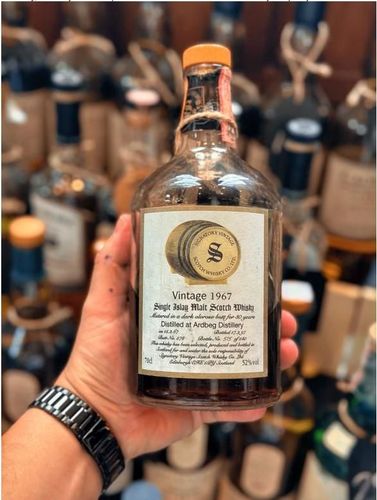
Known affectionately among collectors as the "Dumpy Bottles," these distinctive squat bottles became synonymous with Signatory throughout the late 1980s and 1990s.
Today they evoke immediate nostalgia among whisky enthusiasts and are often collected in their own right. Many legendary bottlings from Port Ellen, Brora, Springbank, Bowmore, Highland Park and Ardbeg appeared in this now-iconic format.
The bottle itself has become part of whisky history.
Cask No. 578
Perhaps the greatest strength of this whisky is its individuality.
Unlike standard commercial releases, this is a single cask bottling.
Every bottle comes from the same Dark Oloroso Sherry Butt No. 578, meaning there was no vatting or blending with other casks. What the drinker experiences is the unique personality created by thirty uninterrupted years inside one exceptional sherry cask.
Dark Oloroso casks typically contribute flavours of:
- Dark chocolate
- Dried figs
- Raisins
- Espresso
- Walnuts
- Leather
- Tobacco
- Christmas spices
Yet Ardbeg's immensely powerful spirit refuses to disappear beneath the influence of the oak.
Instead, the result is remarkable balance.
The peat becomes more elegant than aggressive—less bonfire smoke and more glowing embers. Maritime salt, old leather-bound books, polished oak furniture and antique pipe tobacco emerge alongside rich sherry sweetness.
It is precisely the kind of complexity that whisky lovers dream about.
A Whisky That Matured Alongside History
The cask began its journey while Winston Churchill was still alive.
It matured during the Apollo Moon landings.
It survived the oil crisis of the 1970s.
It rested quietly while dozens of Scottish distilleries disappeared forever.
It outlived the whisky crash of the 1980s.
When it was finally bottled in February 1997, Scotland's whisky industry was entering an entirely new chapter.
Only months later, Ardbeg itself would begin the revival that would make it one of the world's great whisky success stories.
In many ways, this bottle represents the final chapter of the "old" Ardbeg.
Can This Style Ever Be Recreated?
It is a question often asked by whisky lovers.
The honest answer is probably not.
It is not simply the age.
The barley varieties have changed.
The yeast strains have changed.
The maltings have changed.
The casks have changed.
Even the philosophy of whisky production has evolved.
Modern Ardbeg remains an outstanding whisky, but it reflects contemporary craftsmanship rather than the industrial traditions of the 1960s.
That is precisely why these historic bottlings continue to command such admiration.
They capture a flavour profile that can no longer truly be reproduced.
Extraordinary Rarity
Only 540 bottles were produced from Cask No. 578.
Today, significantly fewer remain unopened.
Many were enjoyed decades ago.
Others now reside in private collections and are unlikely ever to return to the market.
Whenever one appears at auction, it immediately attracts worldwide attention from collectors and investors alike.
As supplies continue to diminish, each surviving bottle becomes even more significant.
To Drink or To Preserve?
Every great whisky collector eventually faces the same dilemma.
Should such a bottle be opened, allowing friends and family to experience one of the finest examples of old Ardbeg ever bottled?
Or should it remain sealed, preserved as an irreplaceable historical artefact?
There is no universally correct answer.
Whisky was created to be shared and enjoyed.
Yet bottles like this have also become cultural treasures, representing craftsmanship that can never be recreated.
Perhaps their greatest value lies in reminding us that whisky is more than a drink—it is history in liquid form.
Why This Bottle Matters
Its importance is not defined simply by age.
Nor by rarity.
Nor by market value.
This bottle matters because it represents the perfect intersection of several extraordinary factors:
- Spirit distilled during Ardbeg's legendary 1960s golden era.
- Thirty years of maturation in a single Dark Oloroso Sherry Butt.
- Natural cask strength, bottled without compromise.
- Signatory Vintage's philosophy of authenticity.
- The iconic "Dumpy Bottle" series, now considered legendary among collectors.
Few bottles manage to combine all these elements so seamlessly.
Final Thoughts
In today's whisky world, it is easy to become fascinated by numbers—age statements, auction records, and limited edition bottle counts. Yet the true significance of the Ardbeg 1967 Signatory
Vintage 30 Years Old lies elsewhere.
It is a tangible connection to a vanished era.
Every drop inside this bottle was distilled when Ardbeg was still a relatively small Islay distillery, producing whisky primarily for blends rather than global acclaim. Nobody involved in filling Cask No. 578 could possibly have imagined that, decades later, it would become one of the distillery's most celebrated independent bottlings.
Today, this whisky stands not merely as a collectible, but as a monument to traditional Scotch whisky making. It reminds us that patience, craftsmanship, exceptional spirit, and outstanding casks can create something truly timeless.
For collectors, it is a trophy.
For historians, it is an artefact.
For whisky lovers, it is something even greater—a rare opportunity to experience the soul of an Ardbeg that no longer exists.
- 1967 – A Different World
- Ardbeg Before Modernisation
- The Difficult Years
- Signatory Vintage – Preserving Whisky History
- The Legendary "Dumpy Bottles"
- Cask No. 578
- A Whisky That Matured Alongside History
- Can This Style Ever Be Recreated?
- Extraordinary Rarity
- To Drink or To Preserve?
- Why This Bottle Matters
- Final Thoughts
About the author

Damian Baran
Hooked since a Talisker 10 in 2021, I've tasted over 800 whiskies and love Islay peat and independent bottlings.
To the author