

Reach thousands of whisky and spirits lovers every day.


19.03.2026

How Farm Origins Shape Scotch Whisky?
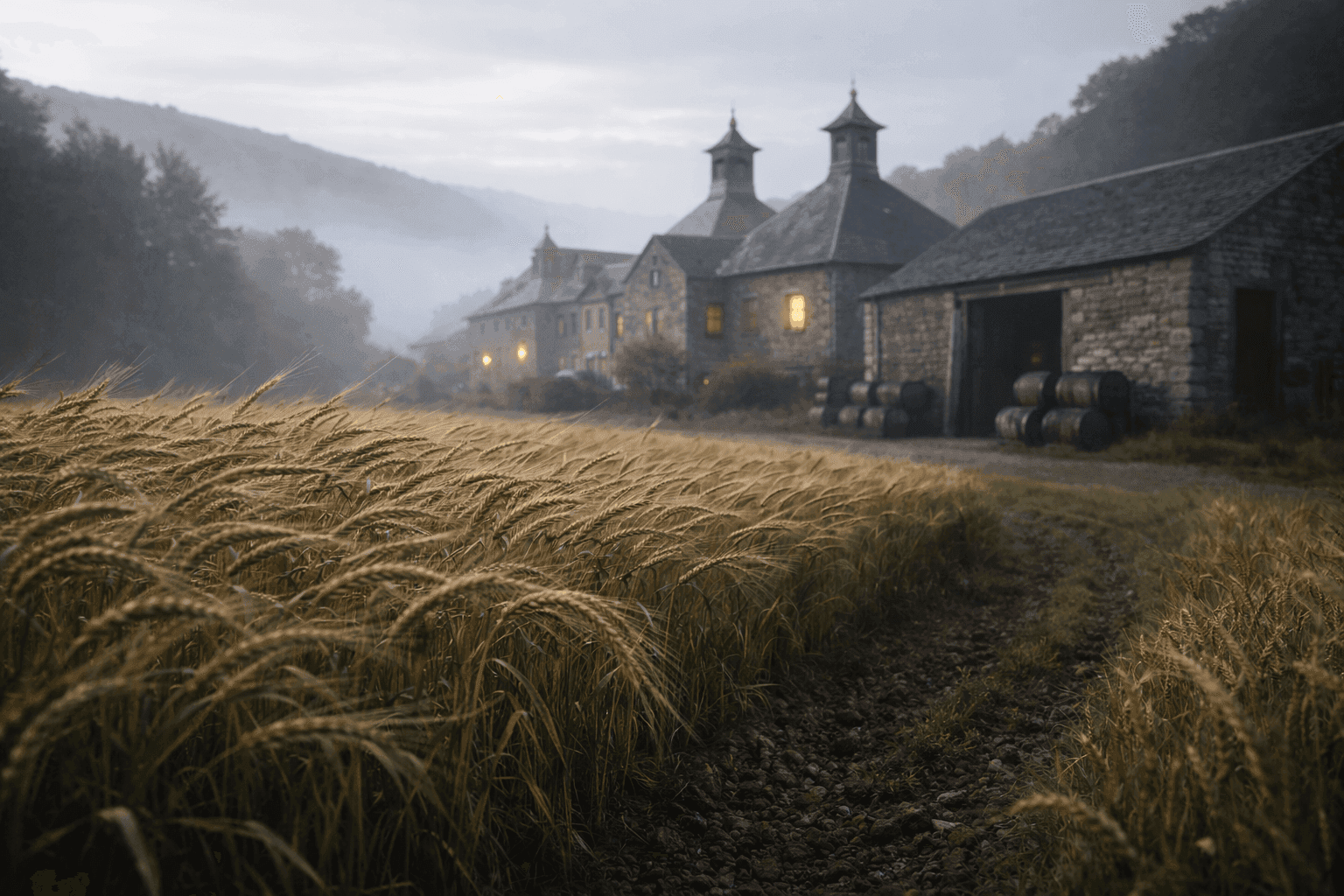
How Farm Origins Shape Scotch Whisky?
The Rise of Terroir-Driven Barley Sourcing in Scottish Whisky
Scottish distilleries are increasingly placing barley origin at the forefront of whisky production, echoing a trend long established in the wine industry. This shift towards terroir-driven barley sourcing emphasises the distinctive qualities imparted by specific farms or regions, offering whisky enthusiasts a new dimension of provenance and authenticity to explore. Distilleries such as Lochlea and Nc'nean have pioneered this approach, highlighting farm-to-bottle narratives and organic certifications that resonate with collectors and sustainability-conscious consumers alike.
This movement is significant not only for its marketing appeal but also because it aligns with broader European trends encouraging traceability and responsible drinking. It positions Scottish whisky favourably against emerging competitors such as French whisky producers, who also capitalise on regional identity. For collectors, understanding these barley-origin labels is essential to navigate an evolving landscape where provenance increasingly influences both flavour expectations and value.
Understanding Barley-Origin Labels: Definitions and Distinctions
Barley-origin claims on Scotch whisky labels typically fall into three categories: single-farm (or single-estate), regional-origin, and blended barley. Each carries distinct implications operationally and flavour-wise, yet the regulatory framework leaves much to interpretation.
Single-farm or single-estate designations suggest that all barley used in the whisky was grown on one specific farm or estate. However, under the Scotch Whisky Regulations 2009, there is no legal definition for these terms. While single malt Scotch must be distilled at one distillery using malted barley, there is no requirement that the barley come from a single source or farm. This regulatory gap allows distilleries considerable flexibility in defining their own standards.
For example, Lochlea Distillery grows its barley on its 380-acre Ayrshire farm and controls malting, distillation, and maturation on-site, though malting itself is outsourced to a nearby contractor. Similarly, Kilchoman on Islay grows large quantities of barley on its farm and uses traditional floor malting but does not perform every production stage under one roof. Thus, “single estate” status often reflects a provenance narrative rather than strict vertical integration.
Regional-origin claims indicate that the barley comes from a broader geographic zone—such as Islay or the Highlands—but do not require single-farm traceability. These assertions offer a modest step towards transparency without demanding full proof of terroir influence.
Lastly, blended barley expressions combine malted barley from multiple farms or regions without specific origin claims beyond the whisky category designation. This approach prioritises consistency and scale over provenance storytelling.
The distinctions between these labels are therefore as much about marketing ambition as operational reality. Buyers should be aware that definitions vary widely among producers and that “single farm” can mean different things depending on each distillery’s practices.
Operational Impacts of Barley Origin on Flavor Profiles
Scientific research confirms that barley variety and growing environment do influence new make spirit flavour, though these effects are often subtle compared to other production variables. The Whisky Terroir Project—a collaboration involving Waterford Distillery and academic institutions—found measurable differences in volatile compounds and sensory attributes linked to soil composition and mineral content at different farms.
For instance, barley grown on limestone-rich soils in Athy produced spirits with toasted almond, malty, biscuity, and oily notes. Conversely, barley from shale-based soils in Bunclody yielded lighter spirits featuring floral and fresh-fruit-forward characteristics. Such findings demonstrate a tangible terroir effect even before maturation.
However, it is important to recognise that fermentation times, distillation cuts, cask selection, and maturation length exert equal or greater influence on final flavour profiles. Commercial whiskies rely heavily on consistency; consumers expect core expressions to taste substantially similar year after year regardless of barley provenance.
Consequently, single-farm or regional releases are generally positioned as limited-edition explorations rather than replacements for house styles. They serve collectors seeking unique flavour nuances linked to place rather than mainstream drinkers expecting uniformity.
Verification Methods for Barley-Origin Claims
For collectors and intermediate buyers aiming to assess authenticity and provenance of barley-origin claims, several practical verification steps are advisable:
-
Examine Label Specificity: Genuine single-farm releases typically name the farm or estate explicitly and may include details about soil type or planting conditions. Generic phrases like “crafted with local barley” are less reliable indicators.
-
Cross-Reference Distillery Documentation: Many distilleries publish harvest reports, maps, photographs, or detailed provenance information on their websites or social media channels. Checking this material can corroborate label claims.
-
Scan QR Codes: Increasingly common on premium bottlings, QR codes link to digital provenance certificates stored via blockchain technology. These immutable records provide batch-specific data such as grain type, soil composition, planting conditions, ABV, bottling date, and batch number. Discrepancies between QR data and label information—such as ABV variations exceeding 0.2%—raise red flags.
-
Seek Third-Party Certification: Some producers voluntarily pursue external validation through bodies like the Scotch Whisky Association or attain certifications such as B Corp status (held by Nc'nean). Academic peer reviews of terroir claims also lend credibility.
-
Buy From Trusted Sources: Purchasing directly from authorised distributors or distillery shops reduces counterfeit risk significantly compared to unverified secondary-market sellers where provenance trails may be opaque.
These layered verification methods help buyers navigate an unregulated terminology landscape while protecting their investment in collectible whiskies.
The Collector's Perspective: Value and Market Trends
The rise of terroir-driven barley sourcing has coincided with a broader premiumisation trend in whisky collecting. Between 2011 and 2021, rare whisky investments surged 428% in value overall; within this market segment limited-edition single-farm releases command markups ranging from 50% to 150% above retail prices at auction.
Examples illustrate this dynamic clearly: Lochlea’s Harvest Edition (Second Crop), matured in port, bourbon, and STR barriques at 46% ABV with a global release of 11,000 bottles retails around £60–70 but trades for £90–120 secondhand. Bruichladdich’s Octomore 16.3—a peated single-farm expression distilled exclusively from Islay-grown barley—retails near £280–320 yet fetches £450–600 at auction within two years.
Scarcity drives much of this premium; Octomore releases typically number only 200–400 bottles per edition. Additionally, the provenance premium reflects growing consumer interest in sustainability and local sourcing amid rising concerns about counterfeiting—estimated at two out of five Scotch single malts sold secondhand being fake.
This collector appeal ties back to the broader trend of terroir-driven barley sourcing gaining traction across Scotland’s whisky landscape.
Blended Barley Offerings: A Different Approach
Contrasting with single-farm or regional-origin expressions are blended barley whiskies which prioritise consistency over granular provenance claims. These core expressions combine malted barley sourced from multiple farms or regions to achieve a stable house style across multiple batches and years.
For example, Lochlea’s Our Barley expression (46% ABV) employs a blend matured across bourbon, oloroso sherry, and STR casks without asserting any single-farm origin claim. This approach ensures flavour reliability for bars, retailers, and collectors seeking dependable profiles rather than experimental nuances.
Blended barley remains the industry standard for most Scotch whiskies due to its scalability and flavour stability advantages. While it lacks the storytelling allure of terroir-driven releases, it provides buyers with predictability—a key factor for daily enjoyment or cocktail mixing.
Understanding this distinction helps buyers set expectations when comparing pricier limited editions against more accessible core range bottlings.
Future Outlook: Trends and Considerations for Buyers
As Scottish distilleries continue embracing terroir-driven barley sourcing—with increasing adoption of digital provenance tools—the landscape for collectors will grow more complex yet transparent. Regulatory frameworks remain permissive but may evolve toward greater standardisation or mandatory disclosure given consumer demand for authenticity.
Buyers should remain vigilant by distinguishing between well-documented single-farm releases supported by QR-code verification and third-party certification versus looser regional sourcing claims that offer less assurance. The flavour impact of terroir is real but modest compared to maturation choices; thus these releases are best appreciated as collectible limited editions rather than replacements for core house styles.
Exploring bottles with verified provenance enriches your whisky journey while mitigating counterfeit risks prevalent in secondary markets today. As this trend matures alongside sustainability priorities within Europe’s ‘drink better’ movement—as seen across Scottish distilleries like Lochlea—it offers exciting opportunities for enthusiasts to connect deeply with place-driven spirits.
Enjoy responsibly.
FAQs
What Does "Single-Farm Barley" Mean on a Whisky Label?
“Single-farm barley” indicates that all malted barley used was grown on one specific farm or estate; however, no legal definition exists under Scotch Whisky Regulations 2009. Definitions vary by distillery—some may outsource malting or other stages while still claiming single-farm status based on grain origin alone. To verify authenticity look for detailed label info naming the farm plus supporting documentation from the distillery.
How Can I Verify Barley-Origin Claims When Buying Whisky?
Verification involves examining label specifics (farm name/soil type), checking distillery websites for harvest reports or maps, scanning QR codes linking to blockchain-stored provenance certificates if available, seeking third-party certifications like B Corp status or Scotch Whisky Association endorsements, and purchasing from authorised sellers only. Spiritory listings often include verified provenance details helping buyers make informed choices.
Does Barley Origin Significantly Affect Whisky Flavour?
Research confirms that soil type and environment impart subtle flavour differences detectable even before maturation—such as nutty or floral notes—but production variables like fermentation time and cask selection usually have greater impact overall. Single-farm releases showcase these nuances as part of limited editions rather than defining core house styles.
Are Single-Farm Barley Whiskies More Valuable Collectibles?
Yes; limited-edition single-farm whiskies often command premiums at auction due to scarcity combined with growing collector interest in provenance narratives and sustainability credentials. For example, Lochlea’s Harvest Editions trade above retail price reflecting demand for authentic terroir-driven expressions available via platforms like Spiritory.
How Do Regional-Origin Claims Differ from Single-Farm Labels?
Regional-origin means the barley comes from a broader geographic area (e.g., Islay) without specifying a particular farm; it offers moderate transparency but less precise traceability than single-farm claims. These whiskies balance local sourcing storylines with production flexibility suitable for larger-scale releases.
Explore this fascinating category further by browsing verified single-farm releases on Spiritory – your trusted marketplace for authentic premium whiskies from Scotland’s pioneering terroir-focused distilleries.
- The Rise of Terroir-Driven Barley Sourcing in Scottish Whisky
- Understanding Barley-Origin Labels: Definitions and Distinctions
- Operational Impacts of Barley Origin on Flavor Profiles
- Verification Methods for Barley-Origin Claims
- The Collector's Perspective: Value and Market Trends
- Blended Barley Offerings: A Different Approach
- Future Outlook: Trends and Considerations for Buyers
- FAQs
About the author

Christopher Deutsch
I did not start with rare bottles or a collection in mind. I shared drams with friends and picked up what was on the shelf. Curiosity grew. I began to notice aromas, textures, and the stories on the labels, and simple enjoyment became personal. Now I am just looking to expand my palate, to try new and interesting whiskeys, and I am always fascinated by how certain bottles can completely surprise me.
To the author