

Reach thousands of whisky and spirits lovers every day.


09.02.2026

Quadruple Distillation: How Extra Passes Are Redefining Scotch
Quadruple Distillation: How Extra Passes Are Redefining Scotch
The Rise of Extra Distillation in Scotch
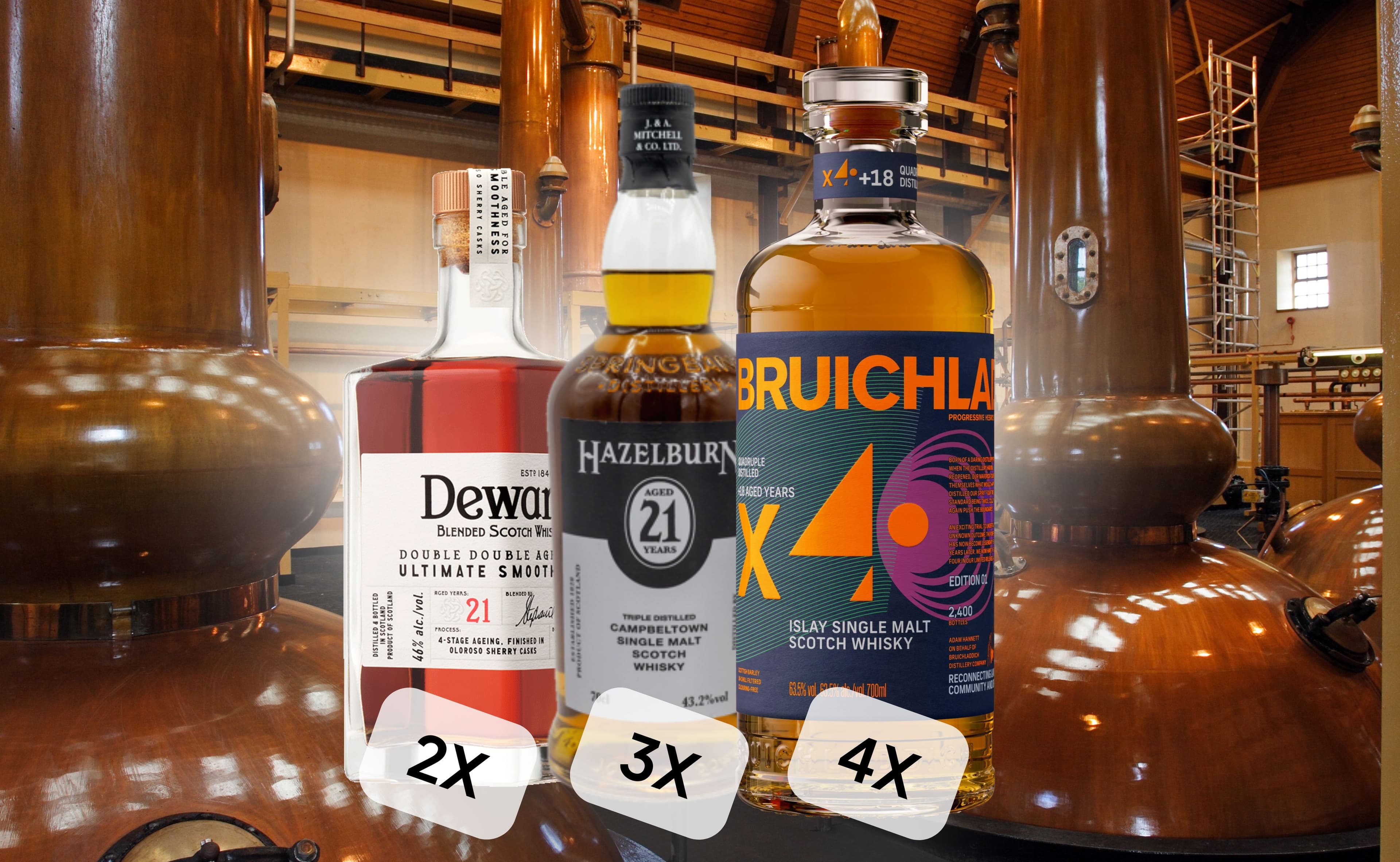
The whisky world has long been defined by tradition, yet innovation continues to shape its future. A striking example is the emergence of extra distillation techniques, notably quadruple distillation, which is pushing the boundaries of Scotch whisky production. In November 2025, Bruichladdich unveiled the X4+18 Edition 01, the world's first commercially bottled quadruple-distilled single malt Scotch whisky. This release not only intrigued collectors but also raised fundamental questions about how additional distillation passes influence flavour and value.
This trend towards extra distillations offers a fresh lens to examine whisky production. While standard Scotch typically undergoes double distillation, Bruichladdich’s experiment reintroduces a historical practice with a modern twist, challenging conventional norms. The quadruple-distilled spirit achieves extraordinary refinement and purity, presenting consumers with a novel sensory experience that stands apart from traditional expressions.
Such innovations matter because they address a saturated market where differentiation is key. By exploring how extra distillation alters whisky’s character, enthusiasts and producers alike gain insight into the evolving landscape of premium Scotch. This development invites us to reconsider what defines quality and complexity in whisky today.
Understanding Distillation: The Basics
Distillation is the heart of whisky production, transforming fermented wash into the spirit we savour. At its core, this process exploits differences in boiling points to separate alcohol from water and other compounds called congeners—molecules responsible for flavour and aroma.
The Chemistry of Distillation
When the fermented wash is heated in copper stills, ethanol vapourises before water due to its lower boiling point. As the vapour rises through the still’s neck or column, it cools and condenses back into liquid, concentrating alcohol while altering the chemical makeup of congeners. These congeners include esters that lend fruity notes, aldehydes which add orchard-like scents, phenols contributing spice, and higher alcohols that provide body and warmth.
Each distillation pass refines the spirit by selectively removing undesirable compounds such as methanol and fusel oils found in the heads and tails cuts. The master distiller’s skill lies in making precise cuts to collect the heart—the desirable middle portion rich in ethanol and flavour compounds—while discarding less favourable fractions. This delicate balance shapes the whisky’s ultimate character.
Standard Distillation Practices
In Scotch whisky production, double distillation has been the norm for centuries. The first distillation converts fermented wash at roughly 8% ABV into low wines at around 25% ABV. The second distillation then concentrates this further to produce new make spirit typically between 60% and 75% ABV.
This two-pass system strikes an effective balance between maintaining flavour complexity and operational efficiency. By contrast, Irish whiskey traditionally employs triple distillation—a practice rooted in historical tax incentives—which yields a lighter, smoother spirit by removing more congeners. This difference explains much of the stylistic gap between Irish whiskies’ delicate fruitiness and Scottish malts’ robust body.
Comparing Distillation Methods: Double vs. Triple vs. Extra
Exploring how different numbers of distillation passes affect whisky reveals fascinating contrasts in body, texture, and aromatics.
Double Distillation
Double-distilled whiskies retain a fuller-bodied character with rich aromatic complexity. Because fewer congeners are removed compared to higher distillations, these spirits often showcase earthy, meaty, or oily notes that contribute depth and warmth on the palate. The nose tends to be robust with pronounced fruity esters and spice elements.
This method remains standard in Scotland due to its ability to deliver a flavourful new make spirit that matures well over time while preserving traditional sensory hallmarks.
Triple Distillation
Triple distillation removes additional congeners beyond double distillation, resulting in a lighter, more refined spirit with smoother mouthfeel. The palate becomes less oily and earthy, favouring delicate floral and fruity aromas instead.
Irish whiskeys exemplify this style with their elegant softness and clarity of flavour—qualities achieved by pushing reflux further through three still passes. This refinement often appeals to drinkers seeking subtlety over robustness.
Quadruple Distillation
Quadruple distillation takes refinement even further by running the spirit through four separate still passes—as demonstrated by Bruichladdich’s X4+18. This process produces an exceptionally pure new make spirit reaching about 85% ABV before maturation.
The result is a whisky with extreme clarity and subtlety where wood influence dominates due to reduced grain character. Tasting notes often highlight dried fruits, toasted oak, honeyed pastry, and complex oxidative nuances from innovative cask choices like Rivesaltes wine casks.
However, this ultra-refined profile means some traditional flavour depth is sacrificed for purity—a trade-off that commands higher prices given the costly process and reduced yield involved.
The Role of Still Design in Distillation
Beyond pass count, still design profoundly shapes how congeners are separated during distillation.
Still Design and Reflux
The height and shape of copper pot stills determine reflux—the process where heavier vapours condense back into liquid within the still rather than passing forward. Taller stills with narrow necks promote more reflux by forcing vapour to travel further and cool as it rises; this results in lighter spirits as heavier compounds fall back into the pot.
Conversely, shorter or broader stills allow more congeners through to the condenser, producing richer new make spirits. The lyne arm’s angle also matters: an upward slope increases reflux for lighter spirits; downward slopes reduce reflux yielding fuller-bodied results; straight arms fall between these extremes.
Master distillers carefully consider these physical factors alongside cut points to craft desired flavour profiles at each stage.
The Importance of Copper
Copper remains essential for its chemical interactions during distillation—it removes sulphur compounds responsible for off-putting aromas like rubber or burnt matches. Over time copper stills wear thin from this reaction requiring regular refurbishment from specialist coppersmiths such as Forsyths.
This material not only ensures purity but also subtly influences aroma development contributing to smoothness and balance in final whisky expressions.
Maturation: How Distillation Affects Cask Interaction
Distillation strength at cask filling plays a crucial role in how whisky interacts with oak during maturation—and thus its evolving flavour profile.
Cask Types and Their Influence
Different cask types impart distinct flavours: Bourbon casks typically provide vanilla sweetness and caramel notes; sherry casks add dried fruits and nutty richness; rarer choices like Rivesaltes wine casks contribute complex oxidative character with hints of honeyed pastry or tropical fruit.
In quadruple-distilled whiskies such as Bruichladdich X4+18, where new make is extremely pure and light-bodied, cask influence becomes especially prominent—effectively painting flavour on a near-neutral canvas.
High ABV and Flavour Extraction
Filling casks at higher ABV—as high as 85% for Bruichladdich’s quadruple-distilled spirit—alters extraction dynamics significantly compared to typical fill strengths around 63.5%.
Water-soluble compounds like tannins extract more slowly at high strength while alcohol-soluble elements such as oak lactones (imparting coconut or woody notes) extract more readily. This leads to maturation profiles with heightened wood character balanced by slower development of harsher tannins or bitterness.
Such interplay results in complex yet refined flavours distinct from standard Scotch maturation experiences.
Market Implications And Consumer Considerations
The advent of extra-distilled whiskies carries important economic realities alongside sensory innovation that collectors and consumers should weigh carefully.
Pricing And Scarcity
Quadruple distillation is extraordinarily costly due to increased energy use, labour intensity for precise cuts across four runs, and drastically reduced yield—Bruichladdich reports only 30–40 casks per week compared to 200 under normal double distilling conditions.
Consequently, bottles like X4+18 Edition 01 retail at premium prices (£225 per bottle) reflecting genuine production expense rather than mere luxury markup. Limited releases (2,400 bottles for Edition 01) add scarcity value appealing strongly to collectors seeking rare expressions with historical significance or authentic innovation.
Secondary market activity confirms demand for these unique whiskies but also reveals sensitivity to broader economic conditions affecting liquidity.
Consumer Preferences And Trends
Whisky enthusiasts increasingly seek products offering distinct flavour experiences backed by craftsmanship narratives rather than formulaic special editions. Extra distillations meet this desire by delivering genuinely different textures and aromas not replicable through finishing or bottling strength alone.
However, not all consumers prefer ultra-refined spirits; many favour fuller-bodied whiskies retaining robust congeners typical of double distilled malts. The recent trend toward extra distillations thus represents both an exciting frontier for innovation enthusiasts and a niche within broader market preferences—a dynamic visible as smaller Scottish producers experiment with triple distilling once again while European craft makers explore additional passes inspired by Bruichladdich’s lead.
This ongoing evolution underscores how innovations like quadruple distilling shape premium Scotch’s future amid changing consumer tastes.
The Future Of Distillation In Whisky Production
Looking ahead, whether extra distillations become common practice or remain specialist experiments depends on balancing sensory benefits against financial and environmental costs.
Quadruple distilling offers unique purity and subtlety but demands significant investment with reduced yield—factors limiting widespread adoption mostly to well-capitalised producers aiming for brand differentiation through innovation rather than volume growth.
The trend sparked by Bruichladdich’s X4+18 release encourages others to reassess traditional double distilling orthodoxy; some smaller Scottish distilleries are revisiting triple distilling after decades away from it while European craft producers explore multiple passes creatively.
Ultimately, consumer demand will dictate sustainability: those valuing authenticity alongside novelty may embrace ultra-refined spirits as part of their collection or tasting repertoire; others will continue appreciating richer double-distilled malts’ depth.
For now, extra distillations represent an exciting frontier demonstrating that even centuries-old Scotch traditions harbour untapped possibilities—inviting master blenders brave enough to venture beyond convention into new realms of flavour discovery.
FAQs
How does quadruple distillation affect whisky flavour compared to traditional methods?
Quadruple distillation produces an exceptionally pure spirit by removing more congeners than double or triple methods. This results in a lighter body with subtle aromas where wood influence dominates due to reduced grain character. While it sacrifices some traditional robustness for refinement, it offers unique tasting experiences prized by collectors seeking novelty beyond standard profiles found in most Scotch whiskies available on Spiritory.
Are quadruple-distilled whiskies worth their premium price?
Given their rarity, complex production costs—including energy use—and limited yield caused by multiple still passes, quadruple-distilled whiskies command higher prices justified by genuine craftsmanship investment rather than simple luxury markup. Collectors on Spiritory often find these limited editions appealing both for their distinct flavour profiles and potential appreciation value over time due to scarcity.
Can I find triple distilled Scotch whiskies similar in style?
Triple distilled whiskies tend toward lighter bodies with smoother palates compared to double distilled ones; however, triple distilling is relatively rare among modern Scottish producers but common in Irish whiskey traditions. Some smaller Scottish or European craft producers are experimenting again with triple passes inspired by recent trends highlighted on Spiritory’s curated collections showcasing innovative production styles across regions.
How does still design influence whisky produced through extra distillations?
Still height, neck shape, lyne arm angle, and copper composition all affect reflux—the internal condensation process shaping which congeners remain in the spirit versus those returned to the pot during each pass. These factors combined with cut decisions determine purity level achieved during multiple runs; taller stills with narrow necks promote lighter spirits ideal for extra distilled expressions like Bruichladdich’s X4+18 featured on Spiritory’s platform.
What should I consider when buying an extra-distilled whisky?
Look for provenance confirming authentic multiple-pass production methods since these significantly alter sensory characteristics compared to standard whiskies. Consider cask types used during maturation as they heavily influence final flavours especially when new make is highly refined from extra runs through stills. Exploring verified listings on Spiritory ensures access to genuine limited editions delivering true innovation rather than marketing hype.
Enjoy responsibly — please drink in moderation. Legal drinking age applies. Not for sale to minors.
- The Rise of Extra Distillation in Scotch
- Understanding Distillation: The Basics
- Comparing Distillation Methods: Double vs. Triple vs. Extra
- The Role of Still Design in Distillation
- Maturation: How Distillation Affects Cask Interaction
- Market Implications And Consumer Considerations
- The Future Of Distillation In Whisky Production
- FAQs
About the author

Natalia Alejandrez Muñiz
I'm a whisky enthusiast and a writer in the making. I enjoy exploring new flavors, learning about the history behind each bottle, and sharing what I discover along the way. This blog is my space to grow, connect, and raise a glass with others who love whisky as much as I do.
To the author