

Reach thousands of whisky and spirits lovers every day.


19.08.2025

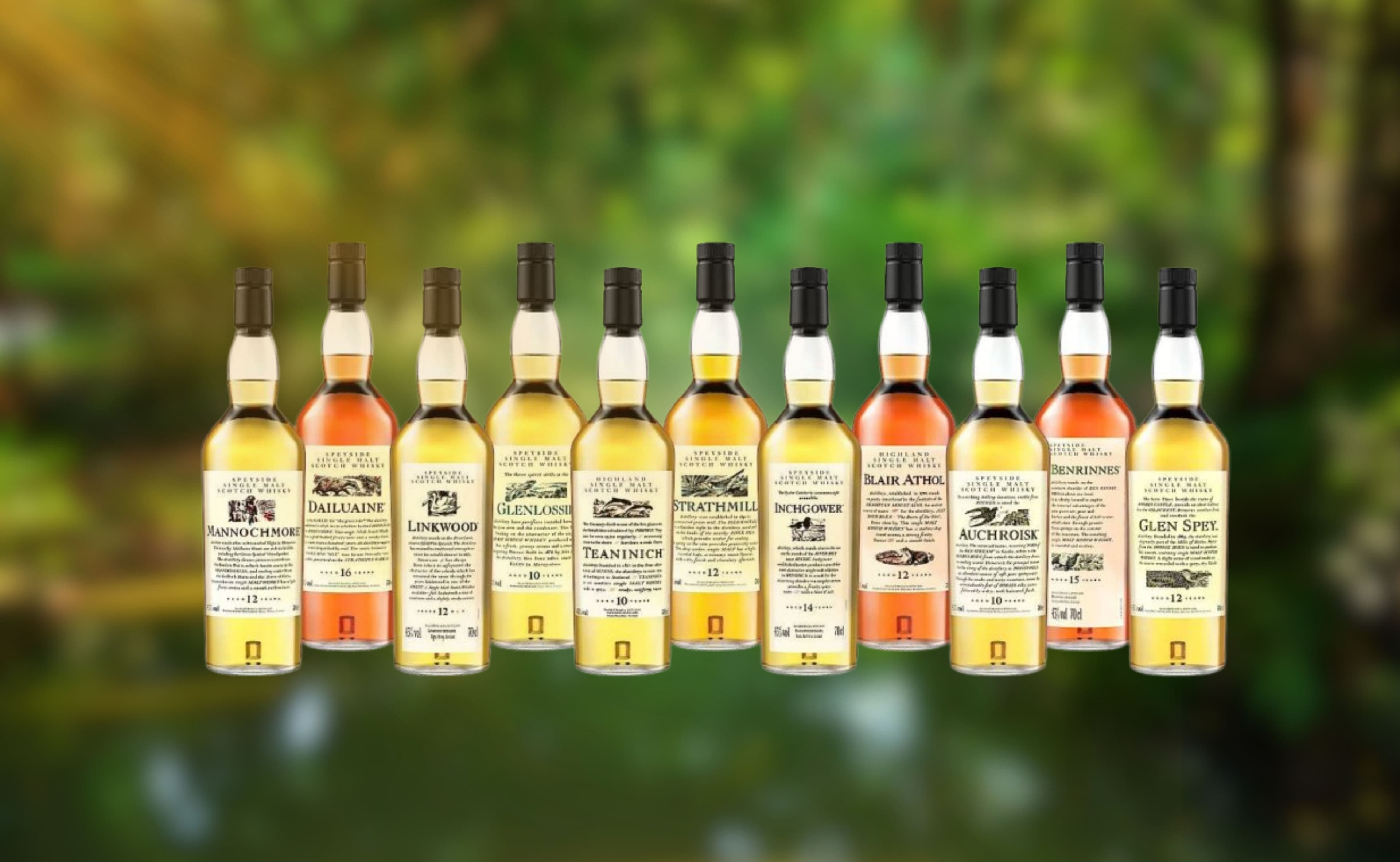
Hidden Gems of Whisky: Flora & Fauna Series
Hidden Gems of Whisky: Flora & Fauna Series
In the early 1990s, following the considerable success of Classic Malts, United Distillers (the predecessor of Diageo) launched another series of single malts
This time, the whiskies came from rather unknown distilleries that primarily produced whisky for the company’s blends.
Series composition
o Mid-strength (43% ABV): initially 22 bottles from 1991–1994, later expanded to 26 editions
o Cask Strength: around 1997, 9 higher-strength versions were added—each bottle numbered and limited edition
o 2001 expansion: four additional distilleries (Auchroisk, Glen Elgin, Glen Spey, Strathmill) joined the series
o Exclusive Reserve Cask Private Collection (2019): only for the Chinese market – 11 single-cask whiskies, each from a single barrel, very limited series (only 158 sets)
What was behind the idea of creating such a distinctive series at that time?
To bring lesser-known distilleries out of the shadows and show a wider audience what single distilleries—often hidden and undervalued in the whisky world—are all about.
The 1980s and 90s – dominance of blends
o At that time, most Scottish whisky was sold as blended Scotch (e.g., Johnnie Walker, Bell’s).
o Many distilleries owned by United Distillers (later Diageo) existed almost exclusively to supply whisky for these blends.
o As single malts, these whiskies were rarely bottled—if at all.
o This approach was conceived by designer Rex Attwood, aiming to give the bottles a "friendly," elegant look that would distinguish them from industrial blends.
Did the experiment succeed? Surprisingly, yes!
o The market was starting to discover single malts.
o In the 1980s, interest in single-distillery whisky was growing, especially following the successes of Glenfiddich and Glenlivet.
o United Distillers decided to capitalize on this trend and showcase the “hidden gems” from their portfolio.
o The problem: these distilleries were little known and had no established brands, so they had to be presented attractively.
The “Flora & Fauna” concept
o The series was initially unnamed and later got its name thanks to writer Michael Jackson, who coined it while describing the bottles.
o Each label featured an illustration of a plant or animal typical of the distillery’s region.
o This was a marketing move: the bottle was meant to look more “artistic” and less industrial, appealing to connoisseurs.
Did the series have a hidden agenda?
Business and collector goals:
o Main goal: promote lesser-known distilleries and test the market viability of selling single malts from such places.
o This allowed the company to:
o gauge customer reactions to flavor profiles of individual distilleries
o build brand awareness among connoisseurs
o justify possible future introduction of permanent single malt releases from those distilleries
Back to the bottles
The first and original series included these distilleries:
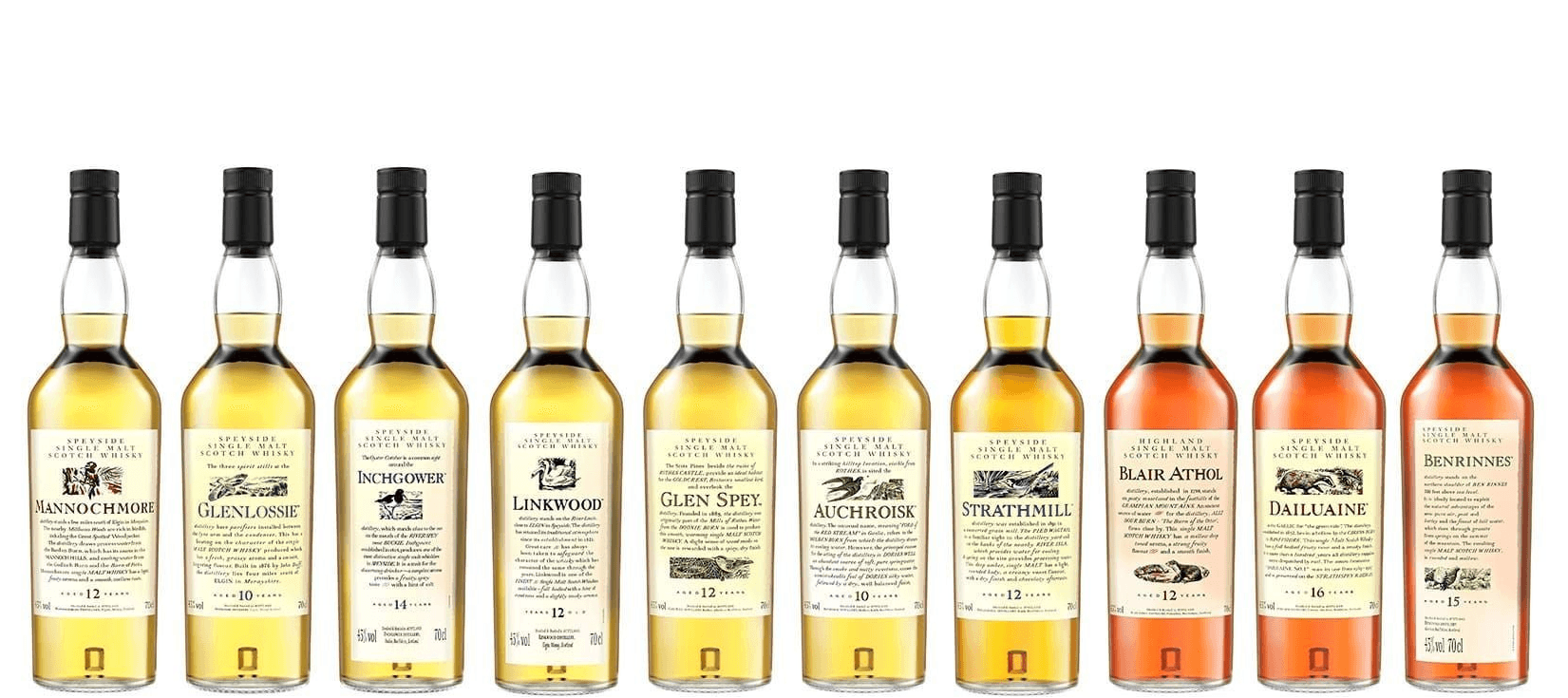
o Aberfeldy (15 yo)
o Aultmore (12 yo)
o Balmenach (12 yo)
o Benrinnes (15 yo)
o Bladnoch (10 yo)
o Blair Athol (12 yo)
o Royal Brackla (10 yo)
o Caol Ila (15 yo)
Region: Islay
Character: gently peaty, maritime, with citrus notes.
Profile:
o Nose: sweet peat smoke, sea salt, lime
o Taste: smoked fish, wet wood, hints of vanilla and citrus
o Finish: long, salty with subtle ash
Why it’s worth trying: Milder than typical Islay, but still full of character—great for newcomers to peat.
o Clynelish (14 yo)
o Craigellachie (14 yo)
o Dailuaine (16 yo)
o Dufftown (12 yo)
o Glendullan (12 yo)
o Glenlossie (10 yo)
o Inchgower (14 yo)
o Linkwood (12 yo)
o Mannochmore (12 yo)
o Mortlach (16 yo)
o Pittyvaich (12 yo)
o Rosebank (12 yo; closed in 1993)
Region: Lowlands
Character: floral-citrus, light, complex.
Profile:
o Nose: white flowers, lemon, lemongrass
o Taste: fresh apples, acacia honey, a touch of mint
o Finish: long, elegant, clean
Why it’s worth trying: Extremely rare and highly prized single malt—bottles fetch very high prices at auctions.
o Teaninich (10 yo)
o Speyburn (12 yo)
Cask Strength (circa 1997–1998) – 9 bottles
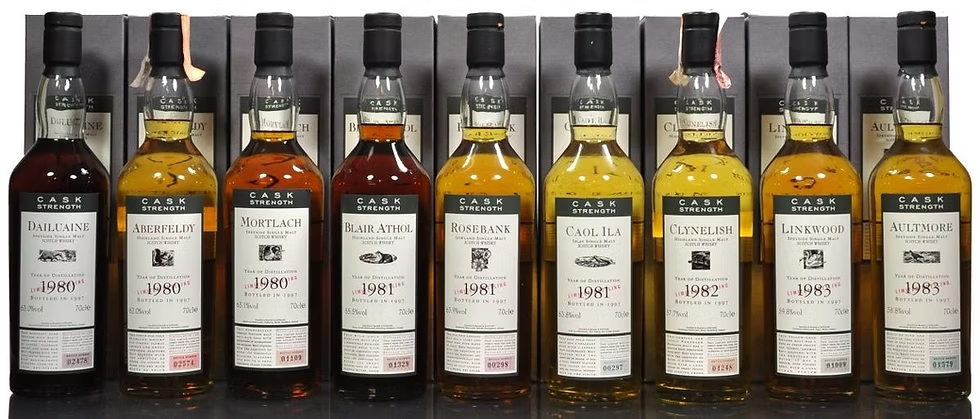
Bottled at barrel strength:
o Aberfeldy (17 yo, ~62%)
o Aultmore (14 yo, ~58.8%)
o Blair Athol (16 yo, ~55.5%)
o Clynelish (15 yo, ~57.7%)
o Caol Ila (16 yo, ~63.8%)
o Dailuaine (16 yo, ~65%)
o Linkwood (14 yo, ~59.8%)
Region: Speyside
Character: green fruits, wax, light floral notes.
Profile:
o Nose: pear, apple, white grapes, linden honey
o Taste: fresh fruits, light vanilla cream, a hint of almonds
o Finish: clean, lightly waxy, long
Why it’s worth trying: The CS edition shows Linkwood’s full creamy character—a great example of “green” Speyside.
o Mortlach (17 yo, ~63.1%)
Region: Speyside (Dufftown)
Character: extremely concentrated, rich, sherry-heavy.
Profile:
o Nose: dense oloroso sherry notes, dark chocolate, figs, roast gravy
o Taste: powerful “umami” Mortlach—soy sauce, walnut, candied cherries
o Finish: very long, with leather and spicy notes
Why it’s worth trying: One of the most powerful whiskies in the series—the pure “Beast of Dufftown.”
o Rosebank (16 yo, ~67.9%)
2001 Expansion – 4 distilleries (mid-strength)
Added four distilleries without special packaging:
o Auchroisk (10 yo)
o Glen Elgin (12 yo)
o Glen Spey (12 yo)
o Strathmill (12 yo)
Reserve Cask Private Collection (2019) – limited edition for Chinese market
The series includes 11 single-cask bottles, each from a distinct distillery and vintage:
o Auchroisk (1990 – 28 yo)
o Benrinnes (1992 – 26 yo)
o Blair Athol (1993 – 26 yo)
Region: Highlands
Character: honey-nutty, with deep oak structure.
Profile:
o Nose: heather honey, caramel, hazelnuts
o Taste: dense toffee, baked apples, cinnamon
o Finish: long, dry, with oak and spice
Why it’s worth trying: Shows how elegant and complex Blair Athol can be after over two decades of maturation.
o Dailuaine (1990 – 29 yo)
o Glenlossie (1996 – 22 yo)
o Glen Spey (1990 – 28 yo)
o Inchgower (1990 – 28 yo)
o Linkwood (1996 – 22 yo)
o Mannochmore (1992 – 27 yo)
o Strathmill (1988 – 30 yo)
Region: Speyside
Character: subtle, with honey and ripe fruit notes.
Profile:
o Nose: dried apricot, acacia honey, light wax
o Taste: peach, candied lemon peel, vanilla
o Finish: very long, soft, elegant
Why it’s worth trying: 30-year-old single cask from Strathmill is an absolute rarity with an exceptionally gentle, dignified character.
o Teaninich (1997 – 21 yo)
About the author

Damian Baran
I am in love with the world of whisky since 2021 after the first films about testing and discovering flavors. the story began with a bottle of Talisker 10, earlier of course brands such as glendifich or johnie walker appeared but it was Talisker that opened my eyes to the diversity of flavors and scents. currently with over 800 whiskies tried and head over heels in love with the climates of islay. finds his flavors in bottles such as ardbeg or lagavulin but I also willingly reach for peated whiskies such as glendronach sweet fruity climates of Speyside.
To the author