

Reach thousands of whisky and spirits lovers every day.


26.03.2026

French Single Malts vs Scotch: Terroir, Casks and Innovation
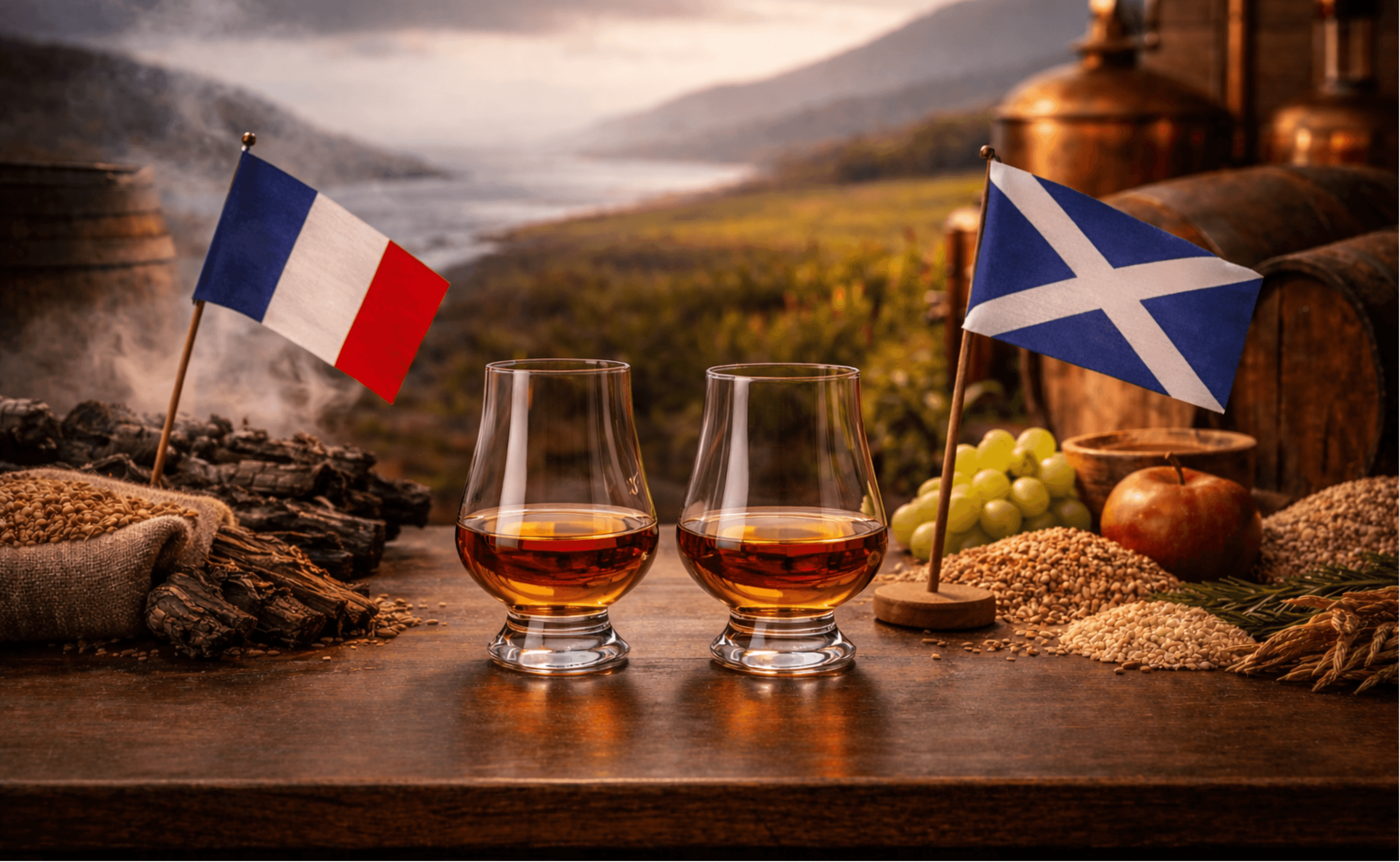
French Single Malts vs Scotch: Terroir, Casks and Innovation
Introduction: The Rise of French Single Malts
French single malts have been steadily gaining traction across European markets, challenging the long-standing dominance of Scotch whisky. This rise is not merely a matter of market share but reflects a broader shift in consumer preferences towards locally produced, artisanal spirits that embrace innovation and terroir expression. With over 100 distilleries across France launching innovative expressions such as sauna-smoked and green tea cask-matured whiskies, the landscape is evolving rapidly.
Understanding how French single malts differ from their Scotch counterparts is vital for buyers and collectors seeking to navigate this dynamic category. These differences span sensory qualities, production methods, and regulatory frameworks, each shaping the character and appeal of the whiskies. As French distilleries push boundaries in style and flavour, comparing them side-by-side with Scotch single malts offers clarity for those looking to explore or invest in these spirits.
Regulatory Framework: Scotch vs. French Whisky
Scotch Whisky Regulations
Scotch whisky production is governed by the stringent Scotch Whisky Regulations 2009, which define clear legal boundaries to protect its heritage and quality. By law, Scotch must be distilled in Scotland exclusively from water and malted barley; while other whole grains may be included, the spirit must be matured for at least three years in oak casks no larger than 700 litres within Scotland itself. The distillation strength cannot exceed 94.8% ABV, and the bottled whisky must contain a minimum of 40% ABV.
These regulations ensure consistency and uphold traditional methods that have shaped five distinct Scotch regions—Highlands, Lowlands, Speyside, Islay, and Campbeltown—each with its own stylistic signatures. This legal framework guarantees that every bottle labelled as Scotch adheres to a heritage-driven standard recognised worldwide.
French Whisky Flexibility
In contrast, French single malts operate under a far more flexible regulatory environment. France lacks a single nationwide legal definition for whisky production. Instead, only two regions—Brittany and Alsace—have protected geographical indications (GIs) with their own specific but less restrictive rules. For example, Brittany’s Whisky Breton GI requires distillation from cereals grown locally and maturation of at least three years in casks up to 1,000 litres but allows greater freedom in grain choice and cask types.
Outside these GIs, producers face virtually no national constraints on ingredients, distillation methods, or maturation vessels. This deliberate regulatory openness encourages experimentation with diverse grains like buckwheat and rye, innovative still designs, and maturation in various wine or brandy casks. The Fédération du Whisky de France consciously avoids stifling innovation through regulation—a philosophy that sets French whisky apart from Scotch’s tightly governed tradition.
Grain Choices: Barley vs. Diversity
The Barley Tradition of Scotch
By definition, Scotch single malts are crafted exclusively from 100% malted barley. The malting process involves soaking barley grains in water to germinate for several days before drying them over heat to halt germination. This crucial step converts starches into fermentable sugars and develops flavour precursors essential to whisky character.
When peat is used during drying—a hallmark of many Scotches—the barley absorbs phenolic compounds that impart smoky aromas and flavours. This malted barley foundation provides the backbone for classic Scotch profiles ranging from light and fruity Speyside malts to heavily peated Islay expressions.
Innovative Grain Use in France
French distilleries embrace grain diversity as a defining feature of their whiskies. While many Breton coastal producers like Glann ar Mor craft unpeated malted barley whiskies that echo maritime characteristics akin to Scottish coastal malts, others boldly incorporate alternative grains.
La Distillerie des Menhirs produces Eddu—the world’s only single malt made entirely from buckwheat (80% unmalted), delivering floral and spicy notes quite distinct from traditional barley whiskies. In Alsace and the Alps, distilleries grow rye, spelt, oats, and barley on separate parcels to explore terroir effects on each grain type individually. This diversity results in a wide spectrum of flavour profiles—from herbal alpine ryes matured in French oak to fruity malt whiskies finished in Cognac or Sauternes casks.
Peat Usage: The Flavor Divide
Peat in Scotch Whisky
Peat smoke is a defining characteristic for many Scotch whiskies but varies widely by region and brand. During malting, drying over burning peat infuses the barley with phenols measured in parts per million (ppm). Islay malts often range from 35 to 50 ppm phenols; heavily peated releases like Ardbeg’s Octomore series can exceed 300 ppm.
This peatiness imparts smoky, medicinal, iodine-like aromas that are polarising yet iconic within Scotch whisky culture. However, many Speyside whiskies remain lightly peated or unpeated (0–2 ppm), illustrating the breadth of flavour within Scotch’s legal framework.
Unpeated Expressions in France
French single malts frequently eschew peat altogether or use it sparingly. Coastal Breton whiskies often present bright fruitiness with floral complexity and mineral salinity reminiscent of Scottish coastal styles but without aggressive smoke.
Alsatian producers offer lightly to moderately peated variants (around 6–20 ppm) matured in diverse wine casks that add spice rather than smoke dominance. For drinkers seeking smoky intensity comparable to Islay within a French context, options like Brittany’s Kornog (35–40 ppm) provide peat presence without overwhelming traditional French terroir expression.
Maturation Climate: The Impact on Flavor
Scotland's Cool, Humid Conditions
Scotland’s cool maritime climate plays a pivotal role in its whisky maturation process. The annual evaporation rate—the "angel’s share"—averages around 2–3%, allowing long ageing periods of 15 years or more without excessive volume loss.
Cool temperatures slow chemical reactions between spirit and wood, fostering subtle development of layered fruitiness, honeyed sweetness, spice complexity, and smooth texture. Alcohol tends to evaporate faster than water here; thus ABV gradually decreases from initial distillation strengths (~60–70%) down to typical bottling levels (40–46%), softening harsh notes into harmonious balance.
France's Diverse Maturation Environments
France’s varied climates create distinct maturation dynamics across regions:
- Brittany experiences maritime conditions similar to Scotland with modest evaporation rates.
- Alsace endures warmer summers with continental swings accelerating maturation.
- The Alps offer cool mountain climates akin to Scotland but influenced by altitude.
- Southern regions such as Corsica see evaporation rates as high as 4–6%, speeding wood-spirit interaction dramatically.
These warmer zones allow French distilleries to achieve mature complexity within 5–8 years—a fraction of typical Scotch ageing time—explaining why many French single malts carry younger age statements without compromising depth or quality.
Cask Choices: Tradition vs. Innovation
Cask Regulations in Scotch
Scotch whisky maturation is traditionally limited to two primary cask types by law:
- Ex-bourbon barrels (American oak, ~200 litres) impart vanilla sweetness, caramel notes, and gentle spice.
- Ex-sherry casks (Spanish oak butts >500 litres) contribute dried fruit richness, chocolate nuances, and tannic structure.
Most distilleries use ex-bourbon barrels for core ageing with sherry casks reserved for premium releases—an economically efficient system rooted deeply in history that shapes classic Scotch flavour profiles.
French Cask Innovation
French whisky makers seize cask variety as an experimental playground:
- Sauternes wine casks add delicate stone-fruit sweetness.
- Cognac barrels lend spice complexity and oxidative depth.
- Armagnac casks introduce earthier notes.
- Calvados apple brandy barrels bring apple-forward sweetness with herbal hints.
- New French oak, particularly Limousin oak from Cognac region or even Japanese mizunara oak used by some Alsace producers like Rozelieures adds bright tannins and vanilla intensity.
This broad palette allows for creative finishing techniques rarely seen in Scotland; it appeals especially to consumers who appreciate wine-like nuances alongside whisky’s traditional character.
Conclusion: The Future of French and Scotch Single Malts
The comparison between French and Scotch single malts reveals two compelling yet contrasting approaches: Scotch embodies centuries-old legal certainty preserving regional heritage within strict production rules; French whisky thrives on regulatory freedom fostering innovation across grains, peat levels, maturation climates, and cask types.
As French single malts continue gaining prominence across Europe amid trends favouring local production and experimental flavours—as noted by the growing popularity of sauna-smoked or green tea-cask matured expressions—buyers benefit from understanding these differences fully. Whether you seek the classic elegance of Speyside or the vibrant novelty of buckwheat or alpine rye whiskies from France depends on your palate preferences.
For collectors and enthusiasts alike: embracing both traditions enriches your whisky journey. Explore established Scotch classics alongside emerging French gems available at Spiritory to experience this evolving dialogue between heritage and innovation firsthand.
Enjoy responsibly—please drink in moderation.
FAQs
What are the main legal differences between Scotch and French single malts?
Scotch whisky production is bound by strict regulations including exclusive use of malted barley grown in Scotland, minimum three-year maturation in oak casks no larger than 700 litres within Scotland itself. In contrast, French single malts face fewer national restrictions; only certain regions like Brittany have protected geographical indications with looser rules allowing diverse grains and larger cask sizes up to 1,000 litres. This flexibility encourages innovation in France compared to Scotland's tradition-bound approach.
How do grain choices affect the flavour profiles of these whiskies?
Scotch single malts use solely malted barley which provides a consistent base rich in fermentable sugars contributing classic flavours such as honeyed sweetness or smoky peat depending on region. French distilleries experiment widely with grains including buckwheat (as seen in Eddu), rye, spelt, oats alongside barley—resulting in floral spice notes or herbal cereal-forward flavours not typical of Scotch whiskies. You can find many such diverse options on Spiritory’s curated selection.
Are all Scottish whiskies peated? How does this compare with French options?
Not all Scottish whiskies are peated; many Speyside malts are lightly peated or unpeated (0–2 ppm phenols), whereas Islay whiskies commonly feature strong peat smoke ranging up to 50 ppm or more for special editions. Most French single malts tend toward unpeated styles emphasizing bright fruitiness or floral notes though some Breton producers offer moderately peated variants comparable to Islay intensity but within a different flavour context.
How does climate influence ageing between Scotland and France?
Scotland's cool maritime climate results in slow maturation with an angel’s share around 2–3% annually enabling long ageing periods often exceeding 15 years with gradual flavour development. France offers diverse climates—from Brittany’s similar cool coastlines to warmer southern regions where evaporation rates reach 4–6%, accelerating maturation so complex profiles arise within shorter periods (5–8 years). This explains why many fine French whiskies carry younger age statements yet deliver mature character.
Where can I find authentic French single malts alongside classic Scotches?
Spiritory offers an excellent platform featuring verified listings across both categories—allowing you to explore innovative French expressions alongside renowned Scottish classics all sourced with transparency and quality assurance. Whether you’re expanding your collection or seeking new tasting experiences inspired by Europe’s evolving whisky scene, Spiritory provides trusted access tailored for enthusiasts like you.
Explore this fascinating world where tradition meets innovation—sip thoughtfully and enjoy every layer!
- Introduction: The Rise of French Single Malts
- Regulatory Framework: Scotch vs. French Whisky
- Grain Choices: Barley vs. Diversity
- Peat Usage: The Flavor Divide
- Maturation Climate: The Impact on Flavor
- Cask Choices: Tradition vs. Innovation
- Conclusion: The Future of French and Scotch Single Malts
- FAQs
About the author

Christopher Deutsch
I did not start with rare bottles or a collection in mind. I shared drams with friends and picked up what was on the shelf. Curiosity grew. I began to notice aromas, textures, and the stories on the labels, and simple enjoyment became personal. Now I am just looking to expand my palate, to try new and interesting whiskeys, and I am always fascinated by how certain bottles can completely surprise me.
To the author