

Reach thousands of whisky and spirits lovers every day.


17.02.2026

What are Cask Finishes? - Moscatel vs PX vs Oloroso vs Tawny Port
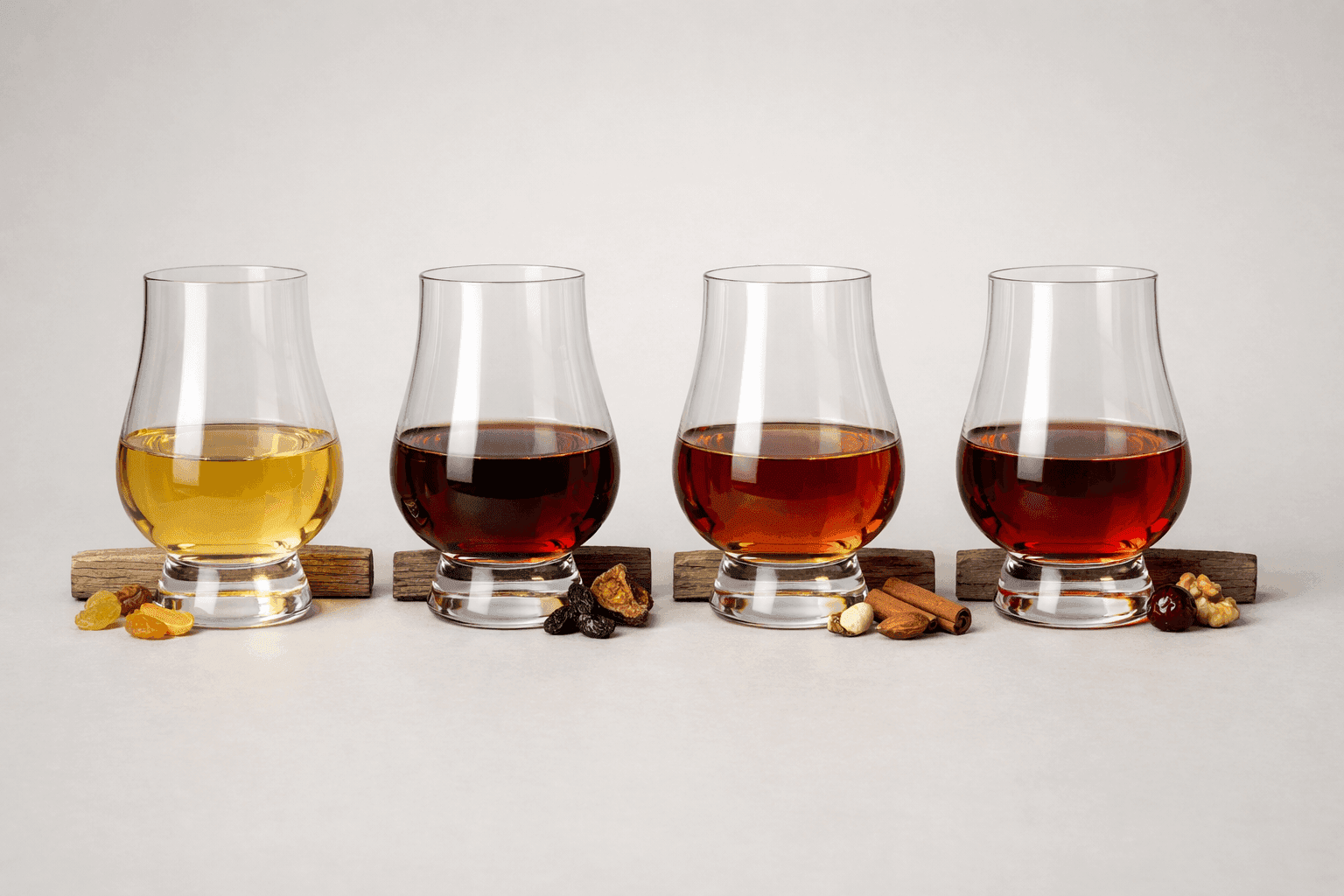
What are Cask Finishes? - Moscatel vs PX vs Oloroso vs Tawny Port
You can taste a difference when spirits finish in Moscatel, PX, Oloroso, or Tawny Port casks. Each cask gives its own special flavor. Experts say Oloroso tastes rich with caramel and walnut. PX has sweet flavors like toffee, fig, and molasses.
You learn how these cask finishes change the spirit’s taste. You can find the one you like best.
Key Takeaways
Cask finishing gives spirits special flavors. Each cask type, like Moscatel or PX, changes the taste a lot.
Moscatel casks add sweet, fruity, and flowery flavors. If you like bright tastes, Moscatel-finished spirits are a good pick.
PX casks make spirits very sweet, like syrup, with toffee and fig flavors. These are great for people who love strong sweetness.
Oloroso casks give nutty and dry flavors. These are best for people who want less sweet and more complex spirits.
Tawny Port casks add both nutty and fruity flavors. They are good for people who like drinks with many flavors.
Cask Finish Comparison
Key Differences
There are clear differences between Moscatel, PX, Oloroso, and Tawny Port cask finishes. Each cask type gives spirits its own taste and smell. The table below shows how they are different:
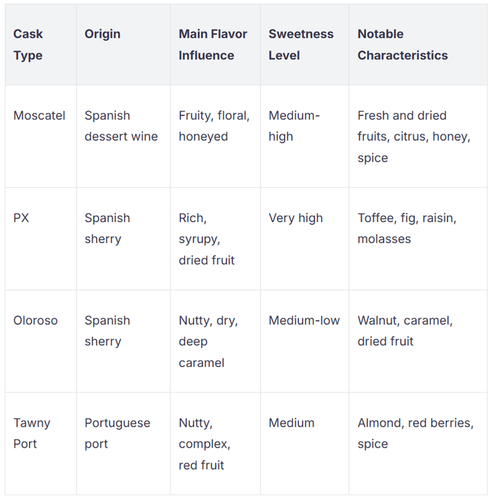
Moscatel casks give more fruit and flower flavors. PX casks make spirits very sweet with dried fruit tastes. Oloroso casks add nutty and dry flavors. Tawny Port casks bring nutty and complex tastes with red fruit and spice.
Flavor Profiles
You can taste special flavors in each cask finish. Here is what you might notice:
Moscatel Cask:
Fresh and dried fruits
Sugary and malty undertones
Briny seaweed
Hints of smokiness
Dried spices
Citrus, honey, orange blossom, butterscotch, caramel, dark chocolate, grape must, plum jam, orchard fruits, cinnamon, honeycomb, ginger
Moscatel casks often give spirits a bright fruit and flower taste. You might taste honey, citrus, and spice. Some whiskies finished in Moscatel casks can also taste a little salty or smoky.
PX Cask:
Toffee
Fig
Raisin
Molasses
Syrupy sweetness
PX casks make spirits taste very sweet and rich. You can find dried fruit, caramel, and syrup flavors.
Oloroso Cask:
Walnut
Caramel
Deep fruit
Nutty dryness
Oloroso casks add nutty and dry tastes. You may taste caramel and walnut, with deep fruit in the background.
Tawny Port Cask:
Almond
Red berries
Spice
Nutty complexity
Tawny Port casks bring nutty and complex flavors. You can taste red fruit, almond, and spice.
This comparison can help you pick a cask finish you like. If you enjoy sweet and fruity tastes, Moscatel or PX casks might be best. If you like nutty and dry flavors, Oloroso or Tawny Port casks are good choices.
Cask Finishing Explained
What Is Cask Finishing?
Cask finishing is a special step in making spirits like whisky. You start with a spirit that has already aged in one type of barrel. Then, you move it to a different cask for more aging. This second cask often held wine or sherry before. The spirit picks up new flavors from the wood and the liquid that was there before.
The history of cask finishing goes back hundreds of years. In Jerez, Spain, people made sherry for almost three thousand years. They formed a guild of coopers in the 1400s to control how casks were made. At first, these casks carried wine to other places. British merchants noticed that the empty casks still had sherry flavors inside. By the 1800s, Scottish whisky makers started using these casks. They found that whisky aged in sherry casks tasted better. This practice became important for both culture and business.
How Cask Finishing Impacts Flavor
Cask finishing changes the taste of spirits in many ways.
Whisky reacts with the wood of its cask – the alcohol absorbs the characteristics of the wood type and if not a new barrel, the components of the previously stored liquid – e.g Sherry, Bourbon etc.
A distiller may decide that after several years in a particular cask, the whisky may improve if it is "finished" in a different type of cask. So the whole cask contents is transferred to another "finishing cask" and left for another period of time.
You can notice these effects:
Whisky interacts with different types of wood.
Previous contents of the cask can impart unique flavors.
The choice of cask and duration of finishing affect the final flavor profile.
When you taste a spirit, you might notice fruit, nut, or spice flavors. These come from the cask finishing process. Each cask gives its own special touch to the spirit.
Moscatel Cask
Origin and Use
Moscatel casks come from places known for sweet wines. Most of these casks are from Spain. They are picked from areas famous for making sherry. Makers choose barrels from top bodegas. Bodegas are special wine cellars that care about quality. The Moscatel wine in these casks uses Muscat of Alexandria grapes. These grapes grow near Chipiona in sandy soil. The sandy ground helps the grapes taste special. The wine made from them is sweet and smells like flowers. This flavor goes into the cask and then into the spirit.
Here is a quick look at where Moscatel casks come from:
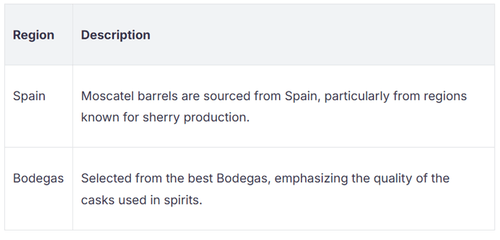
You can see that where the cask comes from is important. The grapes and their home both change the final taste.
Moscatel uses Muscat of Alexandria grapes.
These grapes grow in sandy soil near Chipiona.
The wine is sweet and flowery, which changes the spirit.
Sweet and Fruity Notes
Spirits finished in Moscatel casks taste sweet and fruity. The smell is like fresh grapes and flowers. You might notice honey sweetness and blossom honey. Some people taste juicy grapes, like grape compote, and light raisins. You may also find candied lemon and pear flavors. Sometimes, you get hints of almonds or roasted nuts.
Sweet smell and grape scent
Honey-like sweetness
Light raisin taste
Blossom honey hints
Juicy grape, like grape compote
Candied lemon
Pear flavors
Hints of almonds and roasted nuts
Moscatel cask finishes are very fruity. You may smell flowers and fruits, like wild strawberry and tropical fruit. These flavors are stronger than in other casks. If you like spirits that are bright, sweet, and fruity, Moscatel cask finishes are a great choice.
PX Cask
Background
You find PX casks in the world of whisky and brandy. PX stands for Pedro Ximénez, a type of Spanish sherry. These casks originally aged sherry and later became important in spirit production. PX casks play a key role in making Brandy de Jerez. When you use a PX cask, you add deep color and intense aromas to the spirit. The cask gives rich raisin and dried fruit scents. PX casks have a long history. They influence the maturation process and create a signature profile that is both rich and complex.
You see a careful process when distillers prepare PX casks for whisky finishing:
Distillers select malts for the whisky.
They use pure water from the surroundings of Dunville's.
A slow fermentation process starts the whisky production.
Distillers use traditional copper pot stills to enhance aroma.
The whisky matures for twelve years in oak casks that once held Pedro Ximénez sherry. This step adds sweetness and complexity.
PX casks stand out because they transform spirits with their unique qualities. You notice the deep color and the powerful aroma right away.
Rich, Sweet Flavors
PX cask finishes give whisky a rich and sweet character. You taste layers of flavor that balance citrus sweetness and peat smoke. The whisky becomes multi-dimensional. You find hints of light citrus and waves of maritime peat smoke. PX casks are famous for their extreme sweetness. If not balanced, this sweetness can dominate the whisky.
PX cask maturation imparts a rich and sweet character, balancing with citrus sweetness and peat smoke.
You taste multi-dimensional flavors, with hints of citrus and maritime peat smoke.
PX casks are known for their extreme sweetness, which can take over the whisky if not balanced.
PX casks create spirits that are rich, sweet, and full of dried fruit flavors. You experience a taste that is bold and memorable.
If you want a whisky with intense sweetness and complex aromas, PX cask finishes offer a unique choice.
Oloroso Cask
Sherry Origins
Oloroso casks come from Jerez, Spain. In the late 1700s, winemakers there made a new way to age sherry. They used the solera and criadera system. This system helped keep the sherry’s quality the same. Bodegas, or wine cellars, were built in a special way. These cellars helped make better sherry. Casks became very important for making sherry.
Oloroso sherry is made from palomino grapes. Winemakers use oxidative aging for this sherry. They raise the wine’s alcohol to 17%. This stops a yeast layer called flor from growing. The wine ages while touching air. This gives the wine deep and complex flavors. The cask shapes how Oloroso sherry tastes and feels.
Nutty and Dry Profile
Spirits finished in Oloroso casks taste nutty and dry. These flavors make the spirit stand out.
You might taste rich fruit and nuts.
Toasted nuts and dried fruit are easy to notice.
Some spirits have sweet sherry notes and gentle spice.
Oloroso cask finishes give spirits nutty dryness with a little sweetness. You may taste walnut, caramel, and spice in each sip.
This flavor is good for people who like less sweet drinks. You get many layers of flavor. Each sip can show something new. If you want a rich but not too sweet spirit, Oloroso cask finishes are a good pick.
Tawny Port Cask
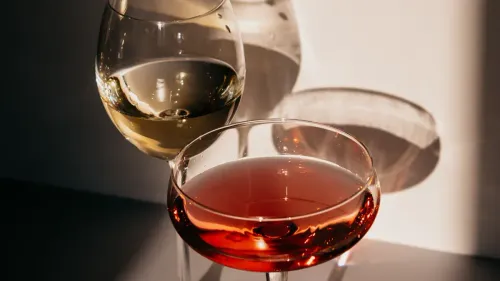
Port Wine Background
Tawny Port comes from Portugal. You see its golden amber color and smell nuts when you pour it. The name "Tawny" means the brownish color that develops as the wine ages in wood. You find that classic Tawny Port is a blend of wines from different years. Winemakers age these wines in large 650-liter casks. Most blends use wines that are three to five years old. When you look at a bottle of Tawny Port, you know it is ready to drink right away.
Here is a table that shows what makes Tawny Port special:
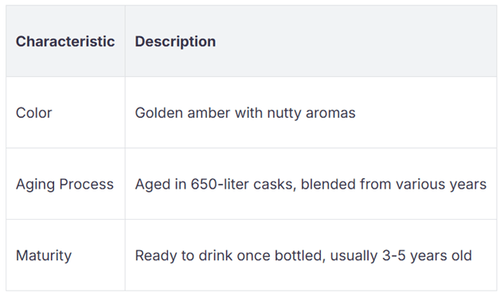
You can also see how Tawny Port changes as it ages:
Ruby port starts with a dark, ruby-red color.
As it matures, it slowly turns amber.
This amber color shows it is now Tawny Port.
Nutty and Complex Flavors
Tawny Port cask finishes give spirits a nutty and complex taste. You notice aromas of nuts, vanilla, and dried fruit. When you sip, you taste almond and hazelnut. You may also find spicy notes like cinnamon and cocoa. Some people taste dark chocolate, raisins, and caramel. You can also find flavors of black and red fruit, oranges, and figs. Sometimes, you notice a hint of licorice or plums.
Here is what you might taste in a spirit finished in a Tawny Port cask:
Aromas of nuts and vanilla
Dried fruits like figs and raisins
Sweetness of caramel
Roasted nuts
Spicy notes of cinnamon and cocoa
Flavors of black and red fruit
Oranges and plums
Hint of licorice
You get a fresh feeling from these flavors. Each sip gives you a new taste. Tawny Port cask finishes are a good choice if you want a spirit with many layers of flavor.
Choosing a Cask Finish
Matching to Taste Preferences
You want to find a spirit that matches your taste. Each cask finish gives a different flavor. You can use your favorite flavors to help you choose. Here is what you should think about:
Do you like sweet drinks? Try spirits finished in Moscatel or PX casks. These often taste like honey, raisins, or caramel.
Do you enjoy nutty or dry flavors? Oloroso or Tawny Port casks can give you notes of walnut, almond, or spice.
If you want something fruity, Moscatel and Tawny Port casks often bring flavors like red berries, citrus, or pear.
Some cask finishes add unique flavors. You might taste chocolaty peat smoke, black cherry jam, or even beach bonfire smells.
Always check the bottle for tasting notes and reviews. These can help you match the spirit to your taste.
You can use these tips to pick a bottle that fits what you like. Spirits finished in different casks can taste very different. You may find one that becomes your favorite.
Tasting Tips
You can compare spirits finished in different casks to learn what you like best. Here are some steps to help you taste and enjoy them:
Pour a small amount of each spirit into separate glasses.
Look at the color. Some cask finishes make the spirit darker or lighter.
Smell each glass. Try to notice scents like fruit, nuts, spice, or smoke.
Take a small sip. Let the spirit cover your tongue. Think about what flavors you taste first.
Notice how the taste changes. Some spirits start sweet and finish dry. Others may have layers of fruit or spice.
Write down what you taste. This helps you remember which cask finish you like most.
Tip: Drink water between each spirit. This cleans your mouth and helps you taste each one clearly.
You can invite friends to taste with you. Everyone may notice different flavors. Sharing your thoughts can make the tasting more fun.
You can use these steps to explore new cask finishes. You may discover flavors like red pear, black cherry, or even hints of smoke. Each cask finish gives you a new experience.
You now know what makes each cask finish special. Moscatel brings sweet fruit and floral notes. PX gives you rich, syrupy sweetness. Oloroso adds nutty and dry flavors. Tawny Port offers complex, nutty, and fruity tastes. You can try different cask finishes to find what you enjoy most.
What flavors did you discover? Share your thoughts or questions in the comments below!
FAQ
What does "cask finish" mean in whisky?
You see "cask finish" when a spirit ages in one barrel, then moves to another for extra flavor. The second cask often held wine or sherry before. This process adds new taste notes.
What flavors can you expect from Moscatel cask finishes?
You taste sweet fruit, honey, and floral notes. Moscatel casks often give spirits a bright, juicy character. You may notice hints of citrus, pear, and spice.
What makes PX cask finishes so sweet?
PX casks come from Pedro Ximénez sherry, which is very sugary. You find flavors like toffee, fig, and molasses. The spirit absorbs these rich, syrupy notes during finishing.
What is the main difference between Oloroso and Tawny Port cask finishes?
You get nutty and dry flavors from Oloroso casks. Tawny Port casks offer nutty complexity with red fruit and spice. Each cask creates a unique taste profile.
About the author

Christopher Deutsch
I did not start with rare bottles or a collection in mind. I shared drams with friends and picked up what was on the shelf. Curiosity grew. I began to notice aromas, textures, and the stories on the labels, and simple enjoyment became personal. Now I am just looking to expand my palate, to try new and interesting whiskeys, and I am always fascinated by how certain bottles can completely surprise me.
To the author